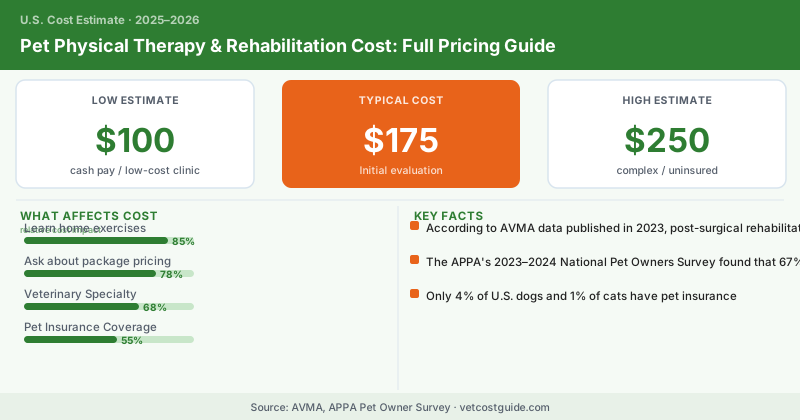
Most pet owners don’t know canine physical therapy exists until their dog can’t walk after surgery. Then they find out it’s not optional — it’s the difference between a dog that regains full function and one that compensates with a permanent limp. Rehabilitation for dogs and cats has grown into a $200 million-plus specialty within veterinary medicine, and costs range from $45 per session at a general rehab clinic to $150+ per session at a dedicated sports medicine center.
- Initial evaluation: $100–$250
- Per session (individual): $45–$150
- Typical course: 8–16 sessions over 4–8 weeks
- Total for a standard post-surgical rehab program: $600–$2,500
- Underwater treadmill sessions specifically: $35–$80 each when billed separately
- Home exercise programs (taught by a CCRT): $75–$150 for the instruction session
Cost Breakdown by Service Type
| Service | Low | Average | High |
|---|---|---|---|
| Initial evaluation | $100 | $175 | $250 |
| Individual rehab session (60 min) | $45 | $90 | $150 |
| Underwater treadmill (per session) | $35 | $60 | $80 |
| Laser therapy (cold laser) | $25 | $45 | $75 |
| Neuromuscular electrical stimulation | $30 | $50 | $80 |
| Therapeutic massage session | $40 | $65 | $90 |
| Acupuncture (if offered) | $50 | $90 | $140 |
| Home exercise instruction | $75 | $110 | $150 |
| Full 8-week program (2x/week) | $600 | $1,200 | $2,500 |
What Pet Rehabilitation Actually Involves
Canine rehabilitation therapy mirrors human physical therapy more closely than most people expect. A certified canine rehabilitation therapist (CCRT) or board-certified veterinary rehabilitation practitioner (CCRP) assesses your pet’s gait, range of motion, muscle mass, and neurological responses, then designs a protocol targeting the specific deficit.
Underwater treadmill (hydrotherapy) is the cornerstone of most programs. Water buoyancy reduces the load on joints and recovering structures while the treadmill motion forces active muscle engagement. Dogs that can’t safely walk on land can often trot on an underwater treadmill within days of surgery.
Therapeutic laser uses specific wavelengths of light to reduce inflammation and accelerate tissue repair at the cellular level. It doesn’t hurt, most dogs tolerate it well, and it’s been shown in multiple peer-reviewed studies to reduce post-surgical pain scores.
Neuromuscular electrical stimulation (NMES) sends small electrical impulses into denervated or atrophied muscle tissue to trigger contractions — critical for dogs recovering from spinal surgery where nerve-muscle communication has been disrupted.
Balance and proprioception exercises — wobble boards, inflatable discs, cavaletti poles — retrain the nervous system’s position sense, which is often impaired after orthopedic or neurological procedures.
When Rehabilitation Is Essential vs. Optional
According to AVMA data published in 2023, post-surgical rehabilitation significantly reduces recovery time for TPLO, femoral head ostectomy (FHO), and spinal decompression surgeries — with studies showing 20–40% faster return to function compared to rest alone.
Rehab is essentially required after:
- TPLO or ACL/CCL repair
- Spinal hemilaminectomy
- Femoral head ostectomy
- Total hip replacement
- Fracture repair with prolonged non-weight-bearing
It’s strongly beneficial but technically optional for:
- Degenerative joint disease / osteoarthritis management
- Neurological conditions like degenerative myelopathy
- Post-amputation adaptation
- Weight loss programs for obese pets
- Athletic performance maintenance in working or sport dogs
Dogs Aren’t the Only Patients
Cats use rehabilitation too — though they’re notoriously less cooperative patients. Feline rehab tends to focus on arthritis management, post-fracture recovery, and neurological conditions. Most CCRT-certified therapists work with cats, though the session structure is usually shorter and more passive-therapy-focused given feline temperament.
The APPA’s 2023–2024 National Pet Owners Survey found that 67% of U.S. households own a pet, and spending on veterinary specialty services — including rehabilitation — has increased every year since 2019. The market is growing, and as more certified practitioners graduate, pricing is becoming more competitive in urban areas.
Not all “canine massage” or “pet wellness” businesses are run by certified rehabilitation practitioners. A CCRT or CCRP credential means the therapist completed a rigorous post-graduate program with supervised clinical hours. Ask about credentials before booking — especially if your pet is recovering from surgery, because incorrect exercise protocols can cause setbacks or re-injury. Your veterinary surgeon can usually refer you to a certified therapist.
How to Reduce Rehabilitation Costs
Learn home exercises. Most CCRTs will teach you the passive range-of-motion exercises, sit-to-stand repetitions, and balance work in one or two sessions. Doing these at home 2–3 times daily reduces how many clinic sessions you need.
Ask about package pricing. Many rehabilitation clinics offer discounts for prepaid session bundles — 10 sessions for the price of 8, for example. If your dog has a known 8–12 week recovery ahead, bundling upfront saves 10–20%.
Check pet insurance coverage. Some comprehensive plans cover rehabilitation as part of post-surgical care, especially if prescribed by the operating veterinarian. Read your policy’s definition of “medically necessary” physical therapy — it often includes rehab when tied to a covered surgical procedure.
Veterinary school clinics. Universities with veterinary programs often operate rehabilitation clinics at reduced rates — sometimes 30–50% less than private practices. Quality is supervised by board-certified specialists.
Frequently Asked Questions
How many sessions will my dog need? It depends entirely on the condition and how the dog responds. A dog recovering from TPLO typically needs 12–20 sessions over 6–10 weeks. A dog with early arthritis might benefit from 6–8 sessions plus a home program. Your therapist will reassess at each session and adjust the plan.
Can I do physical therapy at home instead of going to a clinic? You can do some of it at home, and most therapists will teach you. But underwater treadmill, laser therapy, and electrical stimulation require clinic equipment. For serious post-surgical recovery, combining clinic visits with home exercises gives the best outcome.
Does my regular vet do rehab? Most general practitioners don’t. Rehabilitation requires specialized equipment and certification. Your vet will typically refer you to a dedicated rehabilitation center or a specialty hospital with a rehab department.
Frequently Asked Questions
A single pet physical therapy session typically costs $45–$150, depending on your location, the therapist's experience level, and whether additional modalities like underwater treadmill or laser therapy are included. Most pet owners budget $400–$1,800 per month if their pet requires multiple weekly sessions, which is common during post-surgical rehabilitation.
Many pet insurance plans cover physical therapy if it's prescribed by a veterinarian as medically necessary treatment, but coverage typically ranges from 70–90% after your deductible, leaving you responsible for 10–30% out-of-pocket costs. However, some insurers exclude rehabilitation entirely or cap annual therapy benefits at $500–$1,500, so you should verify your specific policy before starting treatment.
Most pets require 4–12 weeks of physical therapy with 2–3 sessions per week, though this varies based on the injury or surgery type and your pet's recovery progress. A typical post-surgical rehabilitation plan runs 6–8 weeks with sessions tapering from twice weekly to once weekly as mobility improves, though chronic conditions may require ongoing maintenance therapy.