Jennifer’s dog needed a cardiology specialist 40 minutes away. She doesn’t drive. Her regular dog walker offered to do the transport — $45 for the round trip. That’s a pet taxi, and it’s a service millions of pet owners use every year without knowing there’s a name for it.
Whether you need a ride to the vet, a groomer, or a cross-country relocation, pet transport costs vary enormously based on distance, pet size, and service level.
Pet Taxi and Transport Cost Overview
| Service Type | Typical Cost | Notes |
|---|---|---|
| Local Pet Taxi (under 20 miles) | $25–$75 per trip | Vet visits, grooming, daycare pickup |
| Local Pet Taxi (20–50 miles) | $50–$150 per trip | Specialist appointments, airport pickup |
| In-Home Dog Walker Transport | $20–$50 per trip | Walk + transport combined |
| Professional Pet Transport (ground, multi-day) | $300–$800 | 500–1,500 miles, door-to-door service |
| Airline Cargo (domestic) | $150–$300 one-way | IATA-approved crate required |
| In-Cabin Flight (small pets only) | $75–$175 one-way | Must fit under seat in carrier |
| Cross-Country Ground Relay Transport | $500–$2,000 | Multiple drivers, 1–5 days transit |
| International Pet Relocation | $1,000–$5,000+ | Includes health certificates, import permits |
Local pet taxi is the most common use case — and it’s often less expensive than you’d expect. Many dog walkers and pet sitters offer transport as an add-on service.
Local Pet Taxi Services
What most people want is simple: someone to take their dog or cat to the vet when they can’t get away from work, or to pick up a pet from a boarding facility. Local pet taxi services fill that gap.
Pricing structure: Most local services charge a flat rate for trips within a defined radius, then a per-mile rate beyond that. Expect $25–$50 for a typical in-city vet trip, $50–$100 for longer hauls across metropolitan areas.
Who provides it: Independent pet sitters and dog walkers on platforms like Rover, Wag, and PetSmart’s PetsHotel often offer transport. Dedicated pet taxi companies exist in most mid-to-large cities. Some veterinary practices contract with local transport services.
What to look for: Insurance and bonding, reviews from other pet owners, a vehicle set up safely for pets (crates or harness-secured, not loose in a car), and clear communication about who’s responsible if something goes wrong.
Pet taxi is worth the cost when:
- You can’t drive (no car, health issue, work conflict)
- Your pet needs transport to multiple specialist appointments
- You’re recovering from surgery yourself
- You have multiple pets needing simultaneous vet visits
- Your pet is anxious in cars and does better with a calm, experienced handler than a stressed owner
- You need post-surgical pickup when the vet releases your pet mid-day
For routine local trips, budget $30–$60 one-way. For specialist referral appointments, the round-trip cost is often worth the peace of mind that your pet gets there safely and isn’t waiting in a car.
Professional Ground Pet Transport
For longer moves — relocating across states, transporting a dog from a breeder several hundred miles away, or moving a pet during a military PCS — professional ground transport companies offer door-to-door service with experienced drivers.
Expect to pay $300–$800 for 500–1,500 miles by ground, depending on the company, pet size, and whether climate-controlled vehicles are used. Some services use relay drivers (the pet changes hands between drivers at designated points), while others use a single driver throughout. Single-driver service costs more but reduces stress for anxious animals.
What’s included in a typical professional ground transport quote:
- Pickup and delivery at specific addresses
- Regular photo/video updates during transit
- Climate-controlled vehicle
- Feeding and water stops per your instructions
- USDA-accredited health certificate (usually your responsibility to obtain beforehand, $50–$150 from your vet)
Flying With Your Pet
In-cabin: If your pet fits in a soft-sided carrier under the airline seat (typically under 15–20 lbs including carrier), most major airlines allow in-cabin travel for $75–$175 each way. Requirements: health certificate within 10 days of travel, airline-approved carrier. Not all airlines allow this on all routes.
Cargo: Larger pets must travel in the cargo hold in an IATA-approved hard-sided crate. Cost is $150–$300 on most domestic routes, plus $50–$150 for the crate if you need to buy one. Summer and winter cargo restrictions exist — some airlines refuse pets in cargo during extreme temperatures, which can complicate summer or winter moves.
Pet relocation specialists: For international moves or complicated itineraries, professional pet relocation services handle all the paperwork, crating, health certificates, import permits, and logistics. Costs start around $1,000–$1,500 domestically and climb to $3,000–$5,000+ for international relocations requiring quarantine.
Brachycephalic (short-nosed) breeds — Bulldogs, Pugs, Boston Terriers, Persian cats, and similar breeds — face serious respiratory risks in airline cargo. Several major airlines ban these breeds from cargo entirely. If you own a brachycephalic pet, ground transport or in-cabin travel is far safer than cargo. The AVMA recommends against air cargo for these breeds altogether when alternatives exist.
Tips for Keeping Pet Transport Costs Down
Book local transport through existing service providers. Your dog walker or pet sitter likely offers transport as an add-on for less than a dedicated taxi company charges.
Get a health certificate from a low-cost clinic. You need one within 10 days of most transport (especially air travel). A USDA-accredited vet must sign it. Humane society clinics and low-cost vet chains often offer health certificates for $50–$80 vs. $100–$150 at a private practice.
Ship pets and belongings together. Some long-distance movers offer pet transport as part of relocation packages at reduced rates.
Compare relay vs. single-driver quotes. Relay is cheaper ($300–$500) but involves more handler changes. Single-driver is $500–$800 but less stressful for anxious pets.
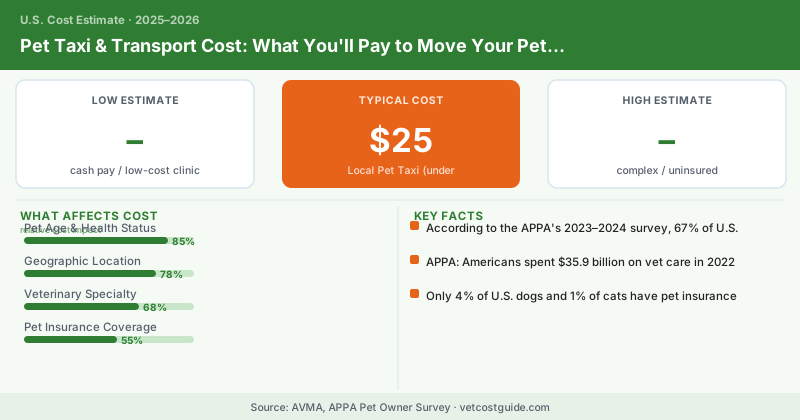
According to the APPA’s 2023–2024 survey, 67% of U.S. households own a pet, and millions of those pets travel with their owners or to veterinary facilities annually. Pet transport is no longer a niche industry — it’s a mainstream service worth understanding before you need it urgently.
Frequently Asked Questions
A local pet taxi trip typically costs $25–$100 per trip, depending on distance and your location. For example, a round-trip ride to a veterinarian 40 minutes away may run $40–$60, while longer local routes can approach $100.
Most standard pet insurance policies do not cover pet taxi or transport services, as these are considered convenience services rather than medical necessities. You'll typically pay out-of-pocket for pet transportation, though some comprehensive plans may offer optional add-ons for coverage.
Book your pet taxi at least 24–48 hours in advance when possible, and confirm the driver is comfortable handling your pet's size and temperament. Ask about crate requirements, air conditioning, and whether the service offers direct vet-to-home transport or makes multiple stops, as this affects both cost and travel time.