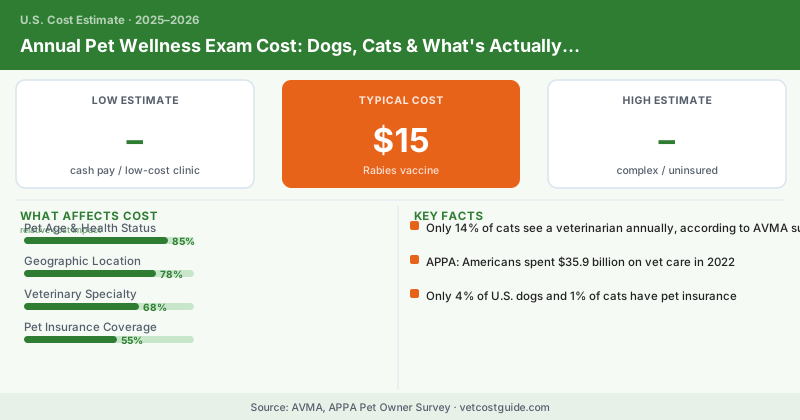
Only 14% of cats see a veterinarian annually, according to AVMA survey data — compared to 83% of dogs. That gap costs lives.
It costs lives in two specific ways: conditions caught late that were treatable when small, and preventable diseases that a vaccine or parasite test would have stopped. Cats are stoic, which makes skipping exams feel lower-stakes than it is. It isn’t.
The cost barrier is real too. A “routine” wellness exam can balloon from a $75 exam fee to a $400 invoice once vaccines, bloodwork, and parasite tests are added. Understanding exactly what’s worth paying for — and what you can defer or skip — makes that number less surprising and lets you plan.
- Base exam fee: $50–$100 at most general practices; $100–$250 at urban or specialty clinics
- Full wellness visit with core vaccines, heartworm test, fecal exam, and basic bloodwork: $150–$400 for dogs; $150–$350 for cats
- Senior wellness panel (age 7+ for dogs; 11+ for cats): add $80–$200 for comprehensive bloodwork
- Banfield/VCA wellness plans: $30–$60/month; evaluate against your itemized costs before enrolling
What Your Exam Fee Actually Covers
The base exam fee ($50–$100 at most clinics; $100–$150 at urban practices) pays for the veterinarian’s physical examination: weight check, temperature, auscultation of heart and lungs, palpation of abdomen and lymph nodes, dental scoring, skin and coat assessment, and evaluation of eyes and ears.
That’s comprehensive — and genuinely valuable. A physical exam catches things that bloodwork doesn’t: heart murmurs, dental disease, early mass lesions, painful joints, retinal changes, ear infections. The exam fee is non-negotiable; everything else is technically optional.
Add-On Cost Breakdown
| Add-On Service | Typical Cost | Notes |
|---|---|---|
| Rabies vaccine | $15–$25 | Required by law in most states |
| Distemper combo (DHPP/FVRCP) | $20–$35 | Core vaccine; dogs and cats |
| Bordetella (dog) | $20–$35 | Recommended for social dogs |
| Leptospirosis (dog) | $20–$35 | Risk-based; discuss with vet |
| Heartworm test (dog) | $35–$60 | Annual; required before prevention refill |
| Fecal exam (dog or cat) | $25–$45 | Checks for intestinal parasites |
| Basic blood chemistry + CBC | $80–$150 | Establishes baseline; catches silent disease |
| Senior blood panel (age 7+) | $120–$250 | Adds thyroid; comprehensive organ screening |
| Urinalysis | $35–$65 | Especially valuable for senior cats |
| Feline leukemia/FIV test (cat) | $45–$65 | Recommended for cats with outdoor access |
What AAHA Recommends by Life Stage
Puppies and kittens (under 1 year): Two to three visits in the first year for vaccine series completion and development screening. Total first-year cost often runs $300–$600 due to vaccine series, deworming, and spay/neuter.
Adult dogs (1–7 years): Annual wellness exam plus core vaccines on their schedule (not necessarily every year — discuss titers or extended-interval protocols with your vet), annual heartworm test, periodic fecal exam. A healthy 3-year-old dog with no symptoms may not need a full blood panel every year, but baseline values before age 5 are worth having.
Adult cats (1–10 years): Annual exam, core vaccines on schedule, fecal if the cat goes outdoors. The 14% annual visit rate is almost certainly insufficient — cats get sick, quietly.
Senior dogs and cats (7+ for dogs; 11+ for cats): AAHA recommends twice-yearly exams. The jump from annual to semi-annual is the single highest-value change most senior pet owners can make. Bloodwork every 6 months catches trends that annual testing misses — a creatinine that jumps from 1.4 to 2.1 over 12 months tells a very different story than seeing it cross 2.0 suddenly.
Private Practice vs. Corporate Chains vs. Low-Cost Clinics
Private practice ($75–$200 exam fee): Your vet knows your pet’s history, has continuity of care, and typically has more time per appointment. Better for complex patients or senior pets with multiple conditions.
Corporate chains (Banfield, VCA, Thrive) ($60–$130 exam fee, or wellness plan $30–$60/month): Consistent protocols, convenient locations, wellness plans that bundle services. Staff turnover can be higher; appointment times shorter. Wellness plans can provide genuine value if you use all included services.
Low-cost clinics and humane societies ($25–$60 exam fee): Best for budget-constrained owners with generally healthy young pets needing vaccines and basic exams. May have limited diagnostic capabilities; not ideal for complex cases.
Veterinary school teaching hospitals ($40–$80 exam fee for general wellness): Supervised by experienced faculty; can be excellent value for complex diagnostic workups. Less convenient for routine annual visits.
If your pet hasn’t seen a vet in several years and is now showing symptoms, budget for more than a routine wellness exam fee. A “sick visit” or problem-specific exam often costs more than a wellness visit, and diagnostics will likely be recommended. The gap between “wellness exam” cost estimates and actual invoice amounts is often driven by this — the pet wasn’t actually well, and the vet found things during the exam.
What Bloodwork Catches Before It’s Visible
This deserves emphasis: by the time kidney disease, diabetes, or hyperthyroidism in cats produces visible symptoms, it’s typically been progressing for months or years. Bloodwork catches these conditions when they’re manageable:
- Kidney disease: elevated BUN, creatinine, and SDMA appear before clinical signs; caught early, progression can be slowed significantly with diet and medication
- Diabetes: elevated fasting glucose; caught early, dietary management plus insulin starts before a diabetic crisis
- Feline hyperthyroidism: elevated T4; caught early, radioactive iodine treatment is curative; caught late, it’s complicated by concurrent kidney disease and hypertension
- Liver disease: elevated ALT and ALP; often reversible at early stages
The $80–$200 spent on senior bloodwork is often the highest-return diagnostic investment available in preventive veterinary care.
Saving Money Without Skipping What Matters
Ask about titer testing. For dogs and cats with documented prior vaccination, titer tests ($60–$100) measure existing antibody levels. Many pets maintain protective immunity far beyond standard revaccination intervals. This is a recognized, AAHA-discussed alternative to routine annual boosters for core vaccines.
Prioritize the senior panel after age 7. You can reasonably defer basic bloodwork on a healthy 3-year-old dog. Don’t defer it on a 10-year-old cat.
Bundle services into one visit. Each additional service at an existing appointment costs less than a separate visit. Scheduling vaccines, fecal, and bloodwork together saves both appointment fees and your time.
Compare wellness plan math before enrolling. Add up what you’d pay for two annual exams, core vaccines, and one dental cleaning without a plan. If your quote exceeds $400–$450, a $35–$45/month Banfield plan likely saves money. If it doesn’t, you’re paying a subscription premium for convenience.
Frequently Asked Questions
AAHA life stage guidelines recommend twice-yearly exams for puppies and kittens (under 1 year), annual exams for healthy adult dogs and cats (1–7 years), and twice-yearly exams for senior pets (7+ years for dogs; 11+ for cats). One human year equals roughly 5–7 pet years, so 'once a year' for a 10-year-old dog is more like seeing your own doctor once every 5–7 years. Senior pets benefit enormously from the twice-yearly schedule — bloodwork abnormalities caught early are the ones that are treatable.
For adult dogs and cats under age 7 with no symptoms: a basic chemistry panel and CBC to establish baseline values and catch any silent abnormalities. For senior pets: a comprehensive senior panel including thyroid (especially critical for cats — hyperthyroidism is one of the most common conditions in cats over 10), kidney, liver, and blood glucose. The senior panel typically runs $100–$200 but can catch kidney disease, diabetes, and thyroid conditions before clinical signs appear — when treatment is still highly effective.
It depends entirely on what you would have paid without the plan and whether you use all the included services. Wellness plans run $30–$60/month ($360–$720/year) and typically cover 2 exams, annual vaccines, a dental cleaning, and some diagnostics. If you'd pay $450+ annually for those same services itemized, the plan saves money. If your pet is young, rarely sick, and fully vaccinated, it may cost more than paying per visit. Read the fine print: most plans auto-renew annually, and unused services don't roll over.