The rescue fee was $150. Or maybe $500 for a breeder puppy. Either way, the first year of vet care typically costs more than the dog. Here’s exactly what that looks like, month by month — so you’re not blindsided.
The AVMA’s puppy care guidelines and the AAHA 2022 Canine Vaccination Guidelines both make one thing clear: the first year is the most medically intensive period of a dog’s life. You’re building immunity from scratch, screening for parasites, and making a permanent reproductive decision. That’s a lot of appointments.
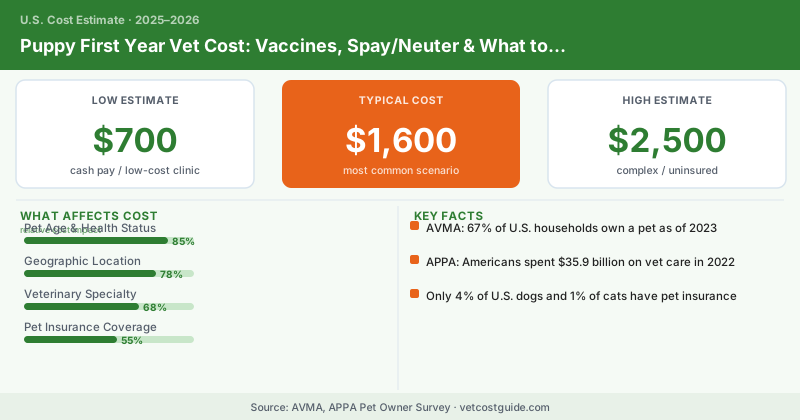
Budget: $700–$2,500 depending on your location, your dog’s size, and your choices about optional vaccines and the spay/neuter timing.
- 8-week visit (first exam + DA2PP): $75–$150
- 12-week visit (second DA2PP + Bordetella): $80–$150
- 16-week visit (third DA2PP + rabies): $80–$150
- Fecal exam + deworming: $40–$80
- Heartworm prevention (12 months): $100–$200
- Flea/tick prevention (12 months): $150–$300
- Spay or neuter: $150–$800 depending on sex and size
- Microchip: $45–$75
- Optional vaccines (Lepto, Lyme, influenza): $30–$60 each
- Pet insurance (if enrolled): $360–$840/year
The 8-Week Visit
This is your puppy’s first encounter with the vet — and it covers a lot of ground. Expect a full physical exam, the first DA2PP (distemper-adenovirus-parvovirus-parainfluenza) combination vaccine, and probably a fecal exam to check for intestinal parasites. Most puppies from breeders or shelters carry roundworms or hookworms, regardless of how clean they look.
Cost: $75–$150 for the exam and first vaccine. Deworming medication (if indicated by fecal results) adds $20–$40.
If your breeder says the puppy has already been vaccinated, bring those records. Your vet needs to verify the vaccine type and timing before deciding whether to continue the series or start over — not all puppy vaccines are equivalent.
The 12-Week Visit
Second DA2PP booster. This is also when Bordetella (kennel cough) vaccination is typically added if your puppy will be in dog parks, daycare, boarding, or training classes. Bordetella is non-core but practically mandatory for any social puppy.
Cost: $80–$150 for exam + vaccine + Bordetella.
This visit is also a good time to discuss lifestyle-based non-core vaccines:
- Leptospirosis ($30–$50): Recommended for dogs that swim, hike, or live where wildlife is present. Lepto is a bacterial infection transmitted through water and urine — it’s also zoonotic, meaning humans can catch it from infected dogs.
- Lyme ($30–$50): Recommended in tick-endemic areas (Northeast, upper Midwest). Requires two initial doses then annual boosters.
The 16-Week Visit
Third DA2PP and the first rabies vaccine — required by law in virtually every US state. Some vets also give the third Bordetella dose here if the two-dose intranasal series was used.
Cost: $80–$150 for exam and vaccines. The rabies certificate is a legal document — keep it somewhere safe.
Core Vaccine Series: Full Cost Picture
| Vaccine | Doses (First Year) | Cost per Visit | Notes |
|---|---|---|---|
| DA2PP (distemper combo) | 3 doses at 8-12-16 wk | $25–$50 per dose | Core; non-negotiable |
| Rabies | 1 dose at 12–16 wk | $20–$35 | Required by law; 1-year or 3-year formulation |
| Bordetella | 1–2 doses | $25–$45 | Non-core; recommended for social dogs |
| Leptospirosis | 2 initial doses | $25–$45 per dose | Non-core; lifestyle-based recommendation |
| Lyme (Borrelia) | 2 initial doses | $30–$50 per dose | Non-core; geographic/tick-exposure based |
| Canine Influenza | 2 initial doses | $30–$60 per dose | Non-core; for boarding/dog park dogs |
Fecal Testing and Deworming
Intestinal parasites are extremely common in puppies — the CDC estimates that roundworm infection rates in puppies can be very high, with many dogs shedding eggs before showing any symptoms. Roundworms and hookworms are also zoonotic, posing real risk to children in the household.
A fecal float test costs $40–$80 at the vet. Deworming (usually pyrantel pamoate or fenbendazole) costs $20–$40 per course. Most vets recommend two to three rounds in the first few months regardless of fecal results, since some parasites don’t show up until later in their life cycle.
Heartworm Prevention: Start Early
Heartworm disease is transmitted by mosquitoes and preventable with monthly medication. The AVMA recommends starting puppies on prevention at 8 weeks of age — not at 6 months, not after a heartworm test. Puppies younger than 7 months don’t need a heartworm test before starting prevention.
Monthly heartworm preventives: $10–$20/month depending on weight and brand. Annual cost for the first year: $100–$200. Combination products that also prevent fleas, ticks, and intestinal parasites (like Simparica Trio or Sentinel Spectrum) can consolidate costs.
Spay vs. Neuter: Cost and Timing
The reproductive surgery is often the single biggest first-year vet expense.
Spay (female): $250–$800 — ranges widely based on the dog’s size (more anesthesia, longer surgery for larger dogs), your clinic type (low-cost clinic vs. private practice vs. specialty hospital), and geographic area.
Neuter (male): $150–$500 — typically less complex than a spay; cryptorchid dogs (one or both testicles retained in the abdomen) cost more ($400–$800) due to the abdominal component.
Timing matters for large breeds. The AAHA Canine Life Stage Guidelines acknowledge growing evidence that early spay/neuter in large and giant breeds is associated with increased risk of joint disorders (CCL rupture, hip dysplasia) and certain cancers. Most orthopedic and oncology specialists recommend waiting until skeletal maturity — 12–18 months — for dogs over 50 lbs. For small breeds, the risks are minimal and early spay/neuter remains standard.
Microchipping: Don’t Skip It
Microchipping is a one-time procedure that takes about 30 seconds. The chip itself is the size of a grain of rice and is injected under the skin between the shoulder blades. It doesn’t require anesthesia and is most cost-effective when done during another appointment (like a spay/neuter, where anesthesia is already in play).
Cost: $45–$75 at most clinics. Shelter dogs are often already chipped. Register the chip number with a national registry like the AKC Reunite or Found Animals databases — the chip only works if someone’s name and phone number are attached to the number.
Flea and Tick Prevention: Year-Round in Most of the US
Monthly flea and tick prevention runs $12–$30/month for most dogs. Annual cost: $150–$300. Tick-borne diseases — Lyme disease, ehrlichiosis, Rocky Mountain spotted fever, anaplasmosis — are serious, expensive to treat ($300–$800 for the testing and treatment cycle), and increasingly prevalent across the US. Prevention is far cheaper.
Popular options: Simparica, NexGard, Bravecto (quarterly chewable), Seresto collar (8-month protection). Ask your vet which is most appropriate for your region.
Don’t buy flea and tick products at the grocery store or gas station. Over-the-counter permethrin-based products labeled for dogs can be fatal to cats in the same household. Hartz and Zodiac spot-on products have been associated with serious adverse reactions. Stick to veterinary-recommended products — the cost difference is small and the safety gap is significant.
Building Your First-Year Budget
Here’s a realistic total for a medium-sized dog (25–60 lbs), assuming core vaccines, spay, and basic prevention:
- 3 puppy vet visits (exams + vaccines): $235–$450
- Fecal exam + deworming: $60–$120
- Heartworm prevention (12 months): $120–$200
- Flea/tick prevention (12 months): $150–$300
- Spay: $300–$600
- Microchip: $50–$75
- Optional lifestyle vaccines (Lepto + Bordetella): $60–$100
Total range: $975–$1,845 without pet insurance. Add $360–$840 if you enroll in a pet insurance plan during this window.
That doesn’t include unexpected sick visits — and there will likely be at least one. Budget an additional $200–$500 as a cushion. Puppies are curious, eat things they shouldn’t, and have immune systems still learning the world.
Frequently Asked Questions
The core vaccines — DA2PP (distemper, adenovirus, parvovirus, parainfluenza) and rabies — are non-negotiable and required by the AAHA 2022 vaccination guidelines. DA2PP is given as a series at 8, 12, and 16 weeks. Rabies is given once at 12–16 weeks depending on your local ordinances. Non-core vaccines like Bordetella (kennel cough), Leptospirosis, Lyme, and canine influenza are recommended based on lifestyle and geographic risk — your vet will help you decide which apply. Skipping core vaccines is not a money-saving strategy; it's a parvo risk.
The timing debate is real, especially for large and giant breeds. Early spay/neuter (before 6 months) has been associated with higher rates of orthopedic problems and certain cancers in large breeds like Golden Retrievers, Labrador Retrievers, and German Shepherds. Most veterinary orthopedic specialists recommend waiting until skeletal maturity — 12–18 months for large breeds. For small breeds (under 25 lbs), the risks are much lower and early spay/neuter is still commonly recommended. Discuss timing with your vet based on your specific dog's breed and individual risk factors.
Yes — and the first year is exactly when to buy it. Insurance purchased before any conditions are documented covers those conditions for life. A puppy enrolled at 8 weeks has no pre-existing exclusions yet. Once your vet records document a condition — even something as minor as an upset stomach — it can be excluded from future coverage. Monthly premiums for puppies run $30–$70/month depending on breed, location, and deductible. For breeds prone to expensive hereditary conditions (hip dysplasia, heart disease), early enrollment pays for itself many times over.