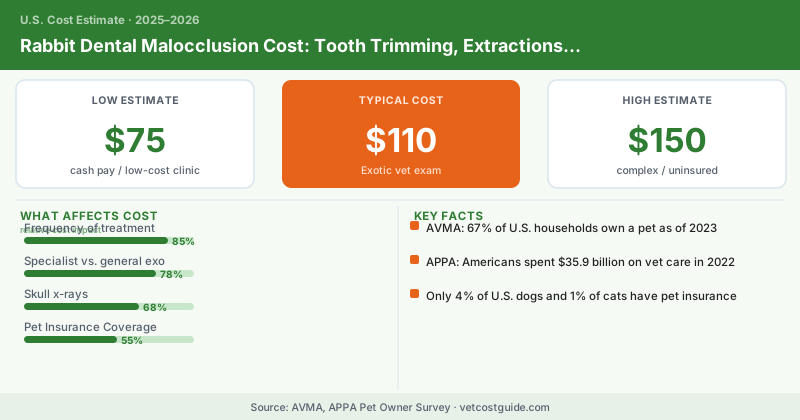
Rabbits’ teeth never stop growing — about 2–3 mm per week for the incisors. That’s remarkable until those teeth don’t line up properly and start growing into the cheeks, tongue, or skull. Dental malocclusion is among the most common health problems in domestic rabbits, and it’s a recurring expense, not a one-time fix. A single dental procedure under anesthesia runs $150–$600, but many rabbits need treatment every 4–12 weeks for life.
- Initial dental exam with an exotic-specialist vet: $75–$150
- Incisor trim under sedation: $75–$200
- Full dental under general anesthesia (molar spurs/points): $250–$600
- Molar extraction (single tooth): $100–$300 added cost
- Annual treatment cost for chronic malocclusion: $600–$3,000+
- Skull x-rays to assess tooth roots: $100–$250
Rabbit Dental Treatment Cost Table
| Procedure | Low | Average | High |
|---|---|---|---|
| Exotic vet exam | $75 | $110 | $150 |
| Incisor trim (sedation) | $75 | $140 | $200 |
| Full dental under anesthesia | $250 | $400 | $600 |
| Molar filing/burring | $200 | $350 | $500 |
| Molar extraction (per tooth) | $100 | $200 | $300 |
| Skull/dental x-rays | $100 | $175 | $250 |
| Syringe feeding support (per week) | $20 | $35 | $60 |
| Annual cost (mild, every 12 weeks) | $600 | $1,000 | $1,600 |
| Annual cost (severe, every 4–6 weeks) | $1,800 | $2,800 | $4,000 |
Why Rabbit Dentals Are More Complicated Than They Sound
Unlike dogs and cats, rabbits have 28 teeth — incisors you can see, and cheek teeth (premolars and molars) buried deep in the jaw where a basic exam can’t reach them. Most of the serious dental disease happens in the cheek teeth, completely hidden without an endoscope and anesthesia.
Rabbit anesthesia carries higher risk than in dogs and cats, which is part of why these procedures cost more relative to the animal’s size. Rabbits are obligate nasal breathers, stress easily, and have unique respiratory physiology that requires experienced handling. An exotic vet with rabbit-specific anesthetic protocols is essential — this is not a procedure to cut corners on by going to a general practice without rabbit experience.
Two types of malocclusion matter:
Incisor malocclusion is visible — the front teeth overgrow and twist, potentially curling into the gum or lip. It’s often genetic (especially in dwarf and lop breeds) and may require periodic trims or, in severe cases, permanent extraction of the incisors. Rabbits do fine without incisors and eat normally once the tongue heals.
Cheek tooth malocclusion is invisible without a scope. Molar spurs and points form as the teeth grow unevenly, slicing into the tongue and cheeks with every chew. Signs include dropping food, weight loss, drooling, and a preference for soft foods. Treatment involves filing or burring the spurs under anesthesia — and the underlying cause (teeth that don’t wear evenly due to bone changes) doesn’t go away, so spurs come back.
What Drives the Price
Frequency of treatment. Mild malocclusion requiring trims every 3 months is expensive but manageable. Severe cases needing monthly anesthesia can cost $3,000+ annually and require honest conversations with your vet about quality of life.
Specialist vs. general exotics vet. Exotic veterinarians charge more than general practitioners for good reason — they have the endoscopic equipment, rabbit-specific anesthetic protocols, and experience to do these procedures safely. A rabbit dental done by an inexperienced practitioner carries real risk.
Skull x-rays. Root elongation — where the tooth roots grow into the skull or nasal cavity — requires x-rays to detect and track. This is common in Holland Lops and Netherland Dwarfs. When roots penetrate into the nasal passages, abscesses can form. Treatment at that stage becomes very expensive.
Extractions. Pulling rabbit cheek teeth is technically demanding and adds significantly to procedure time and cost. Some extractions are necessary; others can be deferred with careful spur management.
Don’t try to file or trim rabbit teeth at home. Rabbit tooth structure is fragile, and improper trimming can crack teeth down to the root, cause abscesses, and create far worse problems than the overgrowth you were trying to fix. All dental work — even incisor trims — should be done by an experienced exotic vet with appropriate sedation or anesthesia.
Prevention and Diet’s Role
Hay is the most important preventive tool. The AVMA notes that rabbits should eat hay equivalent to their body size every day — the long fiber strands create the lateral grinding motion that wears teeth evenly. Rabbits eating primarily pellets or soft foods lack this wear mechanism, and malocclusion progresses faster.
Unlimited timothy hay (or orchard grass for variety) should make up 70–80% of the diet. Pellets should be limited to a small measured portion. Fresh leafy greens add variety without replacing hay’s mechanical function. This doesn’t eliminate genetic malocclusion, but it slows progression significantly in diet-related cases.
Paying for Ongoing Dental Care
Exotic pet insurance covers dental disease in rabbits under most illness policies — but you need to enroll before the condition is diagnosed. Pre-existing dental disease is excluded from coverage. Given that malocclusion is often genetic and may appear within the first 1–2 years of life, enrolling a young rabbit before symptoms appear is the right move.
For uninsured rabbits, ask your exotic vet about care packages or bundled pricing for rabbits with known chronic dental disease. Some practices offer reduced per-procedure pricing for established patients requiring regular scheduled anesthesias.
Frequently Asked Questions
How do I know if my rabbit has dental problems? Watch for: dropping food while chewing, losing weight, wet chin (from drooling), grinding teeth, eye discharge (tooth root pressure on tear ducts), or a preference for soft foods over hay. Annual dental exams under anesthesia are the only way to fully evaluate the cheek teeth in a rabbit with no visible symptoms.
Can rabbit dental malocclusion be cured? Genetic malocclusion can’t be cured — only managed. The underlying bone and tooth abnormalities don’t reverse. Diet-related malocclusion may stabilize or improve slightly with diet correction, but teeth that have been growing unevenly for months need ongoing monitoring.
Is incisor extraction a good option for severe incisor malocclusion? Often yes. Rabbits whose incisors require frequent trimming (every 4–6 weeks) are often better served by permanent extraction. They adapt well, eating pellets and hay without issue. The one-time extraction cost ($300–$600) is often less than a year of repeated trims and anesthesia.
Frequently Asked Questions
A single dental procedure for malocclusion under anesthesia typically costs $150–$600, with complex cases or additional extractions reaching $800 or more. Many rabbits require treatment every 4–12 weeks, meaning annual costs can range from $600–$2,400+ depending on severity and treatment frequency.
Most standard pet insurance plans exclude or severely limit coverage for rabbit dental care, including malocclusion treatment, classifying it as a pre-existing or elective condition. Out-of-pocket costs are the responsibility of the owner, though some specialized exotic pet insurance may offer partial coverage—check your policy details with your provider.
Rabbits with malocclusion typically need professional tooth trimming every 4–12 weeks for life, as their teeth grow continuously at 2–3 mm per week. Severe cases may require extractions ($200–$400 per tooth) rather than repeated trimmings, and maintaining a high-fiber, hay-based diet can slow progression but cannot prevent the need for ongoing professional care.