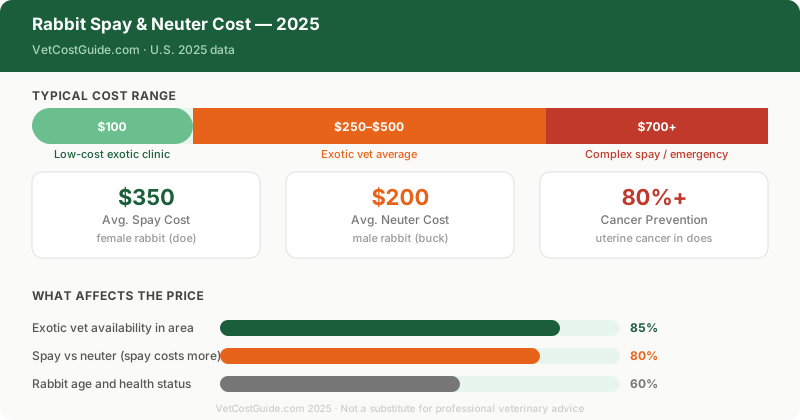
Eighty percent. That’s the estimated proportion of unspayed female rabbits who develop uterine cancer by age 5. It’s the number that changes the entire conversation about rabbit spay surgery — from an optional procedure to a preventive one with real statistical stakes. The surgery costs $250–$600 for does and $150–$400 for bucks (males), both noticeably more than the equivalent procedures in cats. The higher price reflects genuine differences in surgical complexity, anesthetic risk, and the expertise required to do the job safely.
- Rabbit spay costs $250–$600 at an exotic vet and $150–$300 at rabbit rescue clinics or teaching hospitals.
- Rabbit neuter costs $150–$400 at an exotic vet — faster and simpler than a spay, hence lower cost.
- Pre-surgical exam and bloodwork adds $100–$200 on top of the procedure cost and is strongly recommended.
- 80% of unspayed female rabbits develop uterine cancer by age 5 — surgery is the only prevention.
Rabbit Spay and Neuter Cost Breakdown
| Service | Low Estimate | High Estimate |
|---|---|---|
| Spay (doe) at exotic vet | $250 | $600 |
| Neuter (buck) at exotic vet | $150 | $400 |
| Spay at rabbit rescue or teaching hospital | $150 | $300 |
| Neuter at rabbit rescue or teaching hospital | $100 | $200 |
| Pre-surgical wellness exam | $75 | $150 |
| Pre-surgical bloodwork | $80 | $150 |
| Post-operative recheck exam | $50 | $100 |
| Pain medication (take-home) | $20 | $50 |
| Recovery e-collar (if needed) | $10 | $30 |
What Each Procedure Involves
Rabbit spay (ovariohysterectomy) removes both ovaries and the uterus through a midline abdominal incision. In experienced hands, it takes roughly 20–40 minutes under anesthesia. The surgery is more technically demanding than a cat spay — rabbit reproductive organs are more fragile and bleed more readily, which is why surgical technique and species-specific training matter so much. Recovery takes one to two weeks. Watch for eating behavior: a rabbit who isn’t back to eating hay within 12–24 hours post-surgery needs to be seen immediately. GI stasis following anesthesia is a genuine risk.
The surgical site is typically closed with absorbable sutures; e-collars are rarely necessary because rabbits don’t usually chew at incisions the way dogs and cats do.
Rabbit neuter (orchiectomy) is a simpler procedure — small scrotal incisions, removal of both testicles, usually under 10–15 minutes for a practiced exotic vet. Recovery is faster too, with most bucks moving normally within 24 hours. The lower cost compared to a spay reflects this reduced complexity.
Pre-surgical preparation is where rabbit owners are tempted to cut corners, and where it matters most. Bloodwork ($80–$150) checks kidney and liver function before anesthesia, catching contraindications that a physical exam alone can miss. A pre-surgical exam ($75–$150) confirms the rabbit is at appropriate weight and otherwise healthy. These aren’t optional upsells — they’re what makes the procedure safe.
Why Rabbit Anesthesia Is in a Different Category
The price premium for rabbit surgery doesn’t come from profit margins. It comes from the fact that rabbit anesthesia is genuinely more complex and higher-risk than in cats or dogs.
Rabbits can’t vomit, which means no pre-surgical fasting — they actually need to keep eating right up to surgery to prevent GI stasis from starting. They’re obligate nasal breathers, making intubation difficult (and often not performed, with mask or chamber induction used instead). Their cardiovascular and respiratory systems fail quickly under inadequate anesthesia — monitoring must be continuous and precise.
An experienced exotic vet uses species-appropriate drug protocols, heated surgical tables (rabbits lose body heat faster than cats or dogs), continuous oxygen saturation and respiratory rate monitoring, and active warming devices in recovery. This setup is what the cost covers.
The most important question to ask any vet before a rabbit surgery: “How many rabbit spays or neuters do you perform each month?” If the answer is fewer than two or three, that’s not enough recent experience for a procedure where experience matters this much.
- “Rabbit-friendly” vets who rarely see rabbits: Ask for the specific number of rabbit procedures the vet does per month. Fewer than 2–3 per month suggests limited recent experience. For a procedure with genuine anesthetic risk, experience matters.
- Skipping pre-surgical bloodwork: This is the second most common cost-cutting shortcut that leads to bad outcomes. Rabbits hide illness well; bloodwork catches what a physical exam misses.
- Delaying female rabbit spay: Every month an unspayed doe goes unsurgically intact increases uterine cancer risk and the complexity of future surgery if her uterus becomes pathological.
- Aftercare shortcuts: Post-operative pain management is critical. Rabbits in pain stop eating; rabbits who stop eating develop GI stasis. Ensure your vet sends home appropriate pain medication (meloxicam is commonly used).
What Affects the Cost
Veterinarian experience and location. In cities with active rabbit rescue communities, competition among exotic vets can make pricing more accessible. In rural areas where there’s one exotic vet within 100 miles, pricing pressure is entirely with the provider.
Female vs. male. Spays cost 30–60% more than neuters at the same practice, reflecting longer surgical time and greater technical complexity.
Age and condition. Young, healthy rabbits at 4–12 months are the easiest surgical candidates. Older rabbits or those with underlying health issues may need additional pre-surgical workup. Does already in pseudopregnancy or with an enlarged uterus from hormonal cycling may require extra surgical time and care — potentially adding $50–$100 to the base price.
Is Pet Insurance Worth It for This?
Rabbit-specific pet insurance is limited in the US. Nationwide’s Avian and Exotic plan is the primary option, running $25–$50/month depending on age and location.
That said, spay and neuter surgeries are typically classified as elective procedures and are excluded from coverage. The insurance value for rabbits is in covering complications — GI stasis during recovery, post-surgical infections, or the ongoing health consequences the surgery was meant to prevent (cancer treatment itself may be covered if it develops as a new condition).
The more practical financial approach is budgeting $400–$800 upfront for the full spay or neuter process — including pre-surgical bloodwork and exam — before you bring a rabbit home. Particularly if you’re getting a female.
How to Spend Less Without Compromising Care
Contact your local rabbit rescue. House Rabbit Society chapters and regional rabbit rescues maintain lists of rabbit-experienced vets at reasonable rates, and many host low-cost surgery clinics a few times per year. Rescue clinic pricing: $150–$300 for a spay, $100–$200 for a neuter.
Check veterinary teaching hospitals. Schools with exotic animal programs (UC Davis, Tufts, Colorado State) offer the same procedures at 20–40% below private practice rates, performed by supervised residents under faculty oversight.
Get quotes from multiple practices first. Price variation within a single city can span $150–$200. Call, ask specifically about rabbit spay/neuter pricing including the pre-surgical exam, and compare before booking.
Adopt from a rescue that pre-spays/neuters. Many rabbit rescues include the surgery before adoption, built into the adoption fee ($50–$150). It’s by far the best value option if you’re open to adoption.
FAQ
Why does rabbit spay cost more than cat spay? Three reasons: exotic vet expertise premium (fewer vets perform rabbit surgery competently), more specialized anesthesia equipment and monitoring required, and the longer, more technically demanding nature of the surgery itself. A cat spay at a routine clinic takes 15–20 minutes; a rabbit spay with an experienced exotic vet takes 20–40 minutes with higher monitoring intensity throughout.
Can any vet spay or neuter a rabbit? Technically any licensed vet can attempt it, but not any vet should. Rabbit anesthesia has real risks that are dramatically reduced by expertise. Always choose a vet who specifically lists rabbits as a species they see regularly and can answer specific questions about their anesthetic protocol.
At what age should I spay or neuter my rabbit? Most exotic vets recommend surgery between 4 and 6 months of age. By this age, rabbits are sexually mature but still young and healthy enough to handle anesthesia well. Female rabbits can be spayed at 4 months; males are typically neutered once both testicles have fully descended, usually 3–5 months.
Will neutering change my male rabbit’s personality? In most bucks, neutering reduces territorial spraying, inter-rabbit aggression, and mounting behavior significantly within 4–6 weeks (the time for residual testosterone to clear). It also makes bonding two rabbits together much more successful. Neutered males and spayed females can usually be bonded into stable pairs or small groups; intact rabbits almost never can.
Frequently Asked Questions
Rabbit spay surgery (for females/does) typically costs $250–$600, while neuter surgery (for males/bucks) ranges from $150–$400. These costs are higher than equivalent procedures in dogs or cats because rabbits require an exotic animal veterinarian with specialized surgical expertise.
Most standard pet insurance plans exclude or severely limit coverage for exotic pets like rabbits, leaving spay/neuter costs as out-of-pocket expenses for most owners. Some specialized exotic pet insurance providers may offer partial coverage, but you should verify your specific policy before scheduling surgery.
Rabbits should be spayed or neutered between 4–6 months of age, before sexual maturity. This timing is especially critical for females (does) since unspayed rabbits have an 80% risk of developing uterine cancer by age 5, making early surgery a preventive health measure rather than an optional procedure.