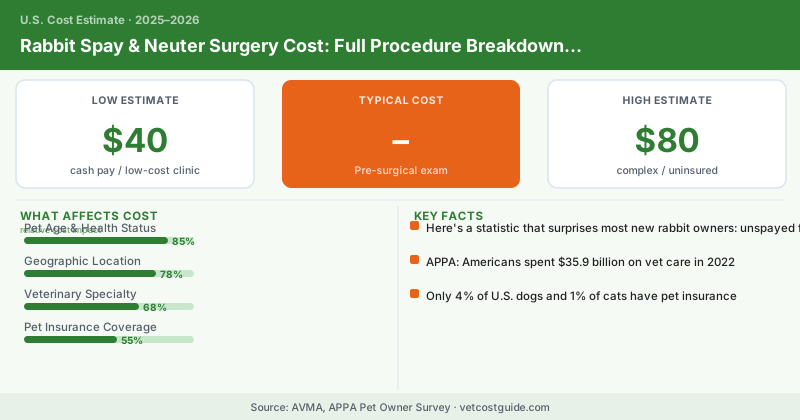
Here’s a statistic that surprises most new rabbit owners: unspayed female rabbits face a lifetime uterine cancer risk that some studies put above 50-80% by middle age, according to House Rabbit Society and veterinary literature on lagomorph reproductive health. That single fact is why spaying isn’t really optional for a pet rabbit the way it might feel optional for other species — it’s genuinely one of the most important preventive decisions you’ll make for a female rabbit’s long-term health.
Rabbit spay and neuter surgery costs more than the equivalent procedure in cats, and there’s a real reason why: rabbits are anatomically and physiologically unique in ways that directly affect anesthesia safety. They can’t vomit, which means the anesthesia risks and recovery protocols differ meaningfully from cats and dogs, and gastrointestinal stasis (a potentially life-threatening slowdown of the digestive system) is a genuine post-surgical risk that requires careful monitoring and management.
- Female rabbit spay: $150–$400
- Male rabbit neuter: $100–$250
- Pre-surgical exam: $40–$80 (often bundled)
- Recommended age: females 4-6 months, males 3-4 months
- Uterine cancer risk in unspayed females: reported above 50% by middle age in some studies
Full Cost Breakdown
| Component | Low End | High End | Notes |
|---|---|---|---|
| Pre-surgical exam | $40 | $80 | Often bundled into surgery package |
| Female spay (ovariohysterectomy) | $150 | $400 | More involved procedure than neuter |
| Male neuter | $100 | $250 | Less invasive, shorter procedure |
| Anesthesia and monitoring | $50 | $150 | Requires rabbit-experienced monitoring |
| Pain medication | $20 | $50 | Given during and after surgery |
| GI motility support (post-op) | $20 | $60 | Critical for preventing stasis |
| Follow-up recheck | $30 | $70 | Confirms healing, no complications |
Why Rabbit Anesthesia Requires Extra Expertise
Unlike dogs and cats, rabbits are prey animals with a physiology that reacts to stress and anesthesia differently — their gut motility can slow or stop entirely under the stress of surgery and recovery, a condition called GI stasis that can become life-threatening if not caught and treated promptly. A vet without specific rabbit experience may not recognize the early warning signs (reduced or absent fecal output, lack of appetite in the hours after surgery) or know the appropriate motility-support medications to use proactively.
This is exactly why finding a rabbit-experienced vet matters more for this surgery than for a routine cat spay — the surgery itself isn’t necessarily harder, but the anesthesia and post-operative monitoring genuinely require different expertise.
Why Spaying Matters So Much for Female Rabbits
Uterine adenocarcinoma (uterine cancer) occurs at a startlingly high rate in unspayed female rabbits — some studies cited by the House Rabbit Society and veterinary sources put lifetime risk above 50%, with figures as high as 80% reported in rabbits over 4-5 years old in certain studies. This isn’t a rare complication to watch for; it’s a near-inevitability in intact females that live a full lifespan. Spaying before this risk develops — ideally by 6 months of age — essentially eliminates it.
Beyond cancer prevention, spaying also reduces or eliminates territorial aggression and false pregnancy behaviors that many unspayed female rabbits display, which often improves quality of life for both the rabbit and the household.
Why Neutering Male Rabbits Also Matters
While male rabbits don’t face the same cancer risk, neutering reduces territorial marking, aggression, and spraying behavior, and it’s required before safely introducing a rabbit to a bonded partner of the opposite sex (unneutered pairs will breed prolifically). Recovery for neuter is typically faster and less involved than spay, reflected in the lower cost.
- Confirm your vet has specific rabbit surgical experience — ask directly, don’t assume “exotic vet” means rabbit-experienced
- Ask what GI motility support protocol they use post-surgery, since this is the main complication risk specific to rabbits
- Don’t withhold food before surgery the way you would for a dog or cat — rabbits should NOT be fasted before anesthesia due to their unique digestive system, and a knowledgeable rabbit vet will confirm this
- Monitor fecal output closely in the 24-48 hours after surgery and call your vet immediately if it stops
Recovery and What to Watch For
Most rabbits recover within 7-14 days, with pain medication and restricted activity to protect the incision. The critical thing to monitor is appetite and fecal output in the first 24-48 hours — a rabbit that isn’t eating or producing normal droppings within a day of surgery needs an urgent call to your vet, since this can indicate developing GI stasis that requires prompt intervention.
Given the strong preventive case for spaying female rabbits specifically, most rabbit-focused rescue organizations and the House Rabbit Society recommend budgeting for this procedure as a near-mandatory cost of rabbit ownership rather than an optional elective, given what’s at stake health-wise for an unspayed female.
Frequently Asked Questions
Rabbit spay surgery costs more than cat spay largely because rabbits have unique anesthesia risks — they can't vomit and are prone to gastrointestinal stasis after anesthesia, requiring a rabbit-experienced vet and more intensive monitoring. This specialized expertise and extended post-operative monitoring adds cost compared to standard cat or dog spay procedures.
Female rabbits are typically spayed between 4-6 months of age, and House Rabbit Society guidance strongly recommends this given that unspayed female rabbits have a very high lifetime risk of uterine cancer, reported in some studies at over 50-80% by middle age. Male rabbits can typically be neutered once both testicles have descended, usually around 3-4 months.