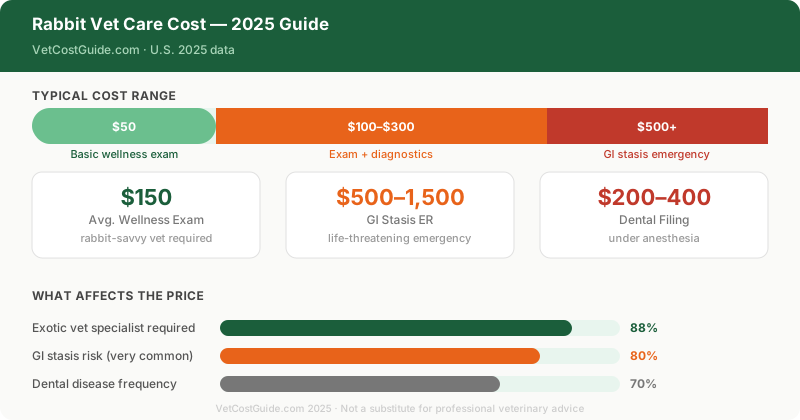
Rabbits are often sold as “starter pets” — low-maintenance, low-cost, easy for kids. But their veterinary needs are more specialized, and often more expensive, than most owners expect. They need exotic or rabbit-savvy vets (not all general practitioners see them). Their teeth grow continuously throughout life and can become a recurring anesthesia-level expense. And one of their most common health crises — GI stasis — can go from “normal at breakfast” to “life-threatening emergency” by dinner. Here’s the real budget picture before you commit.
Finding the Right Vet — and Why It Matters
Not all veterinarians are trained to treat rabbits. Rabbit physiology differs from dogs and cats in clinically important ways: obligate nasal breathing, continuously growing teeth, a digestive system that must keep moving or rapidly becomes dangerous, and sensitivity to anesthetic agents. The Association of Exotic Mammal Veterinarians (AEMV) certifies practitioners with specific exotic mammal training — start your search at their member directory.
When you call a practice, ask: “How many rabbits do you see per month? What anesthetic protocol do you use for rabbits?” A vet who sees rabbits weekly and has a rabbit-specific protocol is what you’re looking for. This matters most in emergencies, when you don’t have time to shop around.
Exotic vet exam fees run $50–$150 — higher than a standard dog or cat visit because fewer practices offer the service and overhead is higher.
| Procedure/Condition | Cost Range | Urgency |
|---|---|---|
| Annual wellness exam (exotic vet) | $50–$150 | Routine — annually |
| Pre-anesthetic bloodwork | $80–$150 | Required before surgery |
| Spay (female rabbit) | $250–$600 | Highly recommended (cancer prevention) |
| Neuter (male rabbit) | $150–$300 | Recommended (behavior + health) |
| GI stasis — outpatient | $200–$400 | Emergency — same day |
| GI stasis — hospitalized | $400–$800 | Emergency — same day |
| Dental malocclusion filing | $200–$500 | Semi-urgent, recurs every 3–6 months |
| Respiratory infection | $100–$300 | Urgent within 24 hours |
| Ear mites treatment | $50–$150 | Non-urgent |
| Abscess (dental or other) | $200–$600 | Surgical, semi-urgent |
| RHDV2 vaccine (where available) | $20–$50/dose | Preventive — check local guidance |
Spay and Neuter: Why It’s Not Optional for Females
Here’s the number that changes the entire calculus for female rabbit owners: unspayed females have an approximately 80% lifetime risk of developing uterine cancer by age 5, according to the House Rabbit Society and multiple veterinary studies. This isn’t a fringe risk — it’s the statistical baseline for intact does.
Spaying a young, healthy female rabbit costs $250–$600 depending on your region and whether pre-anesthetic bloodwork is included. Treating uterine cancer — or elective spaying an older rabbit with other health complications — costs significantly more and carries much higher anesthetic risk. The math is straightforward: spay young.
For males, neutering costs $150–$300. It’s not cancer prevention the same way, but it eliminates territorial spraying, reduces aggression, and makes multi-rabbit households more harmonious. Most exotic vets recommend it.
- Search the AEMV member directory at aemv.org — filter for small mammal practitioners
- Check your local House Rabbit Society chapter (houserabbit.org) — chapters maintain local vet referral lists
- Call the practice and ask specifically: “How many rabbits do you see per month?” A practice seeing 10+ rabbits monthly is well-versed. “We see some” means call the next number.
- Ask what anesthetic monitoring they use for rabbits — pulse oximetry and temperature monitoring are both essential
- Find your vet before your rabbit is sick — emergencies at 9pm are not the time to find out your rabbit-savvy vet is 90 minutes away
Common Illnesses and What They Cost
GI Stasis ($200–$800): The gut stops moving. This is the most common rabbit emergency and the one that kills fastest. Signs: not eating, not producing droppings, hunched posture, teeth grinding. The Cornell University College of Veterinary Medicine identifies GI stasis as one of the leading causes of rabbit death — it can become fatal within 24–48 hours without treatment. Treatment involves IV or subcutaneous fluids, pain management, gut motility drugs, and syringe feeding. Caught early as an outpatient: $200–$400. Hospitalized overnight: $400–$800.
Dental Disease ($200–$500 per treatment): Rabbit teeth grow continuously. When they don’t wear evenly, sharp spurs form on the molars — invisible to the naked eye in a conscious rabbit — and cut into the cheeks and tongue. Diagnosis and treatment require anesthesia. Some rabbits need this every 3–6 months. Unlimited timothy hay is the best prevention (wears teeth naturally). Dwarf breeds are especially prone.
Respiratory Infections ($100–$300): Pasteurella multocida causes “snuffles” — sneezing, nasal discharge, eye discharge. Treated with antibiotics, but can become chronic. Immunocompromised rabbits are most susceptible.
Ear Mites ($50–$150): Psoroptes cuniculi causes intense itching, thick crusty material in the ear canal. Treated with injectable or topical antiparasitic medication. Straightforward to treat if caught early.
Abscesses ($200–$600): Rabbits form thick, caseous (cheese-like) pus in abscesses rather than liquid pus, making simple lancing ineffective. Most abscesses — especially dental ones — require surgical removal of the entire abscess capsule. Recurrence is common. Dental root abscesses sometimes require tooth extraction and jaw surgery.
RHDV2 — An Emerging Concern
Rabbit Hemorrhagic Disease Virus Type 2 (RHDV2) is a highly contagious and frequently fatal calicivirus that has spread across multiple U.S. states since 2020. Domestic rabbits can contract it from contact with wild rabbits, contaminated soil, or even objects tracked in from outside. A vaccine is available in areas where the disease has been detected, typically $20–$50 per dose. Check with your exotic vet about whether RHDV2 has been documented in your region and whether vaccination is recommended.
Lifetime Vet Budget for Rabbits
Indoor rabbits live 8–12 years — longer than most owners expect. Over a 10-year lifespan, a healthy rabbit’s cumulative veterinary costs are comparable to a dog’s. Factor in:
- Annual wellness exams: $50–$150/year
- Spay or neuter (one-time): $150–$600
- Dental care (if your rabbit has malocclusion): $200–$500 every 3–6 months
- One or two GI stasis emergencies over a lifetime: $200–$800 each
- Senior bloodwork (age 5+): $100–$250/year
A rabbit without dental disease costs $300–$600/year on average. One with recurring dental malocclusion can cost $1,500–$3,000/year. Know that going in.
GI stasis — when a rabbit’s gut stops moving — is a life-threatening emergency. A rabbit that hasn’t eaten, hasn’t produced droppings, or is hunched and grinding teeth for 12 or more hours needs emergency exotic vet care immediately. Do not wait until morning. Do not try home remedies. The gut must be restarted with professional treatment; once it has been stopped for too long, the intestinal tissue begins to die and the prognosis drops sharply.
Keeping Costs Manageable
Feed unlimited timothy hay — it’s the single most effective thing you can do to prevent the two most expensive rabbit conditions (dental disease and GI stasis). A 50-lb bale from a farm supply store costs $15–$25 and lasts months; bagged pet store hay costs three to five times more per pound.
Identify your exotic vet now, not during an emergency. Know their emergency hours and their after-hours referral partner.
Consider pet insurance. Nationwide Avian and Exotic covers rabbits with premiums around $25–$50/month. At those rates, a single GI stasis hospitalization more than pays for two years of premiums.
Frequently Asked Questions
In most of the U.S., there are no licensed routine vaccines for pet rabbits. RHDV2 (Rabbit Hemorrhagic Disease Virus) vaccines are available in some areas where the disease has been detected, typically $20–$50 per dose. Annual wellness exams are still critical for dental and GI monitoring, even without vaccines.
Rabbits are obligate nasal breathers and cannot be intubated the same way as dogs and cats. They are also more sensitive to anesthetic agents and prone to hypothermia during procedures. An exotic vet with rabbit-specific protocols makes these procedures safe. An inexperienced vet using dog/cat protocols significantly increases risk.
Often yes — the gap between a routine year and an emergency year is dramatic for rabbit owners. A GI stasis hospitalization alone can cost more than two years of premiums. Nationwide's Avian and Exotic plan is the most widely cited U.S. option, with monthly premiums around $25–$50. Read the dental disease coverage carefully, as it varies.