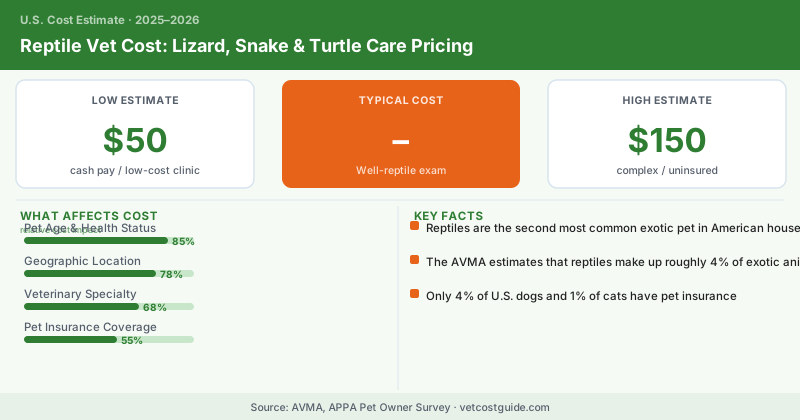
Here’s the thing most reptile owners find out the hard way: reptile vets aren’t everywhere, and when you need one at 9 p.m. on a Saturday, your options narrow fast. Reptiles are the second most common exotic pet in American households after fish — the APPA’s 2023–2024 National Pet Owners Survey puts reptile ownership at roughly 6.2 million U.S. households — yet exotic-capable vets are clustered in urban areas and college towns. Understanding the cost landscape before your bearded dragon stops eating will save you both money and panic.
Myth vs. Reality: Are Reptiles “Low-Maintenance” Pets?
The myth: reptiles don’t need vet care because they’re hardy animals.
The reality: reptiles require specialized care and are prone to husbandry-related illnesses — conditions caused by incorrect temperature, humidity, UV lighting, or diet. The AVMA estimates that reptiles make up roughly 4% of exotic animal vet visits, but they account for a disproportionately high share of preventable illness cases. Metabolic bone disease (MBD) in bearded dragons, respiratory infections in ball pythons, and shell rot in turtles are almost always husbandry problems, not genetic bad luck. The vet bill for treating them runs $200–$1,000+. Correct husbandry costs nothing.
- A reptile wellness exam costs $50–$150 at an exotic-capable vet; specialist practices charge more.
- Annual care including fecal parasite testing and a basic exam runs $100–$250 for most species.
- Common illness costs: metabolic bone disease ($200–$500), respiratory infection ($150–$400), egg binding/dystocia ($500–$2,000 with surgery).
- Finding a reptile vet before you need one is essential — not all general vets see reptiles.
Routine & Annual Care Costs
Reptiles don’t receive vaccines. Routine care is built around a physical exam, fecal parasite testing, and species-specific screening. Most vets recommend a new-animal exam whenever you first acquire a reptile, then annual or biannual wellness checks. If you skip the new-animal exam and your snake arrives with parasites, you’ll know about it eventually — just not until it’s worse.
| Service | Low End | High End | Notes |
|---|---|---|---|
| Well-reptile exam | $50 | $150 | Exotic vet; higher in urban areas |
| Fecal parasite screen | $40 | $80 | Recommended annually for all reptiles |
| Bloodwork (CBC + chemistry) | $100 | $300 | Especially useful for iguanas, tortoises |
| X-rays (1–2 views) | $150 | $350 | Egg counting, MBD diagnosis, foreign body |
| Gram stain/culture | $40 | $100 | For respiratory/skin infections |
| Abscess treatment (minor) | $100 | $300 | Lancing and flush; antibiotics included |
| Skin/scale debridement | $75 | $200 | For retained shed, mites |
Cost by Species
Species complexity, body size, and how geographically available the right vet is all shift the numbers. Tortoises and large iguanas are typically the most expensive to maintain. Small geckos and corn snakes are at the other end.
| Species | Annual Care Estimate | Common Conditions |
|---|---|---|
| Bearded dragon | $150–$400 | MBD, parasites, impaction |
| Ball python | $100–$300 | Respiratory infection, mites, obesity |
| Leopard gecko | $100–$250 | Cryptosporidiosis, MBD |
| Blue-tongued skink | $150–$350 | Respiratory infections, parasites |
| Corn snake | $100–$250 | Respiratory infection, mites |
| Green iguana | $200–$500 | MBD, bladder stones, tail injuries |
| Box turtle | $150–$350 | Respiratory infection, shell injuries |
| Sulcata tortoise | $250–$600 | Bladder stones, MBD, respiratory issues |
Common Illness & Treatment Costs
| Condition | Treatment Cost Range | Notes |
|---|---|---|
| Metabolic bone disease (mild) | $200–$500 | Calcium/Vitamin D supplementation, diet correction |
| Metabolic bone disease (severe) | $400–$900 | Splinting, supportive care, extended treatment |
| Respiratory infection (mild) | $150–$350 | Antibiotics, nebulization, husbandry correction |
| Egg binding/dystocia (medical) | $300–$700 | Oxytocin injection, supportive care |
| Egg binding/dystocia (surgery) | $800–$2,000 | Ovariectomy or salpingotomy under anesthesia |
| Parasites (internal) | $100–$250 | Fenbendazole or metronidazole course |
| Mites (external) | $75–$200 | Topical treatment, enclosure decontamination |
| Abscess (surgical) | $200–$600 | Reptile abscesses are solid; require surgery |
| Impaction (mild) | $100–$300 | Soaks, laxatives, enema |
| Impaction (surgical) | $500–$1,500 | Enterotomy for substrate/foreign body removal |
Egg binding (dystocia) is a potentially fatal emergency in female reptiles — bearded dragons, ball pythons, tortoises, and turtles are all at risk. A female that has been straining to lay eggs for more than 24 hours, or is lethargic and not laying despite being gravid, needs emergency reptile vet care. Untreated dystocia causes sepsis and death. Surgical costs run $800–$2,000.
Finding a Reptile Vet
This is genuinely the hardest part of reptile ownership in many areas. Your options:
- Association of Reptilian and Amphibian Veterinarians (ARAV): searchable directory at arav.org
- ABVP Reptile and Amphibian Practice board-certified specialists: the gold standard, but few in number nationally
- Exotic animal hospitals at veterinary schools: often the best option in areas without private exotic vets, and typically priced 20–40% below private specialty practices
General practitioners who see reptiles occasionally do exist, but their experience varies widely. For a wellness exam or minor issue, they may be adequate. For surgery, internal medicine, or complex diagnostics, start with the ARAV directory.
For tips on reducing out-of-pocket costs, see our overview of cheap vet alternatives — some humane societies and shelter-affiliated clinics do see exotic species.
Bottom Line
Reptile vet care is not as cheap as the “low-maintenance pet” reputation suggests. Budget $150–$300/year for a basic annual exam and fecal test for most small to medium species. Larger species like sulcata tortoises or green iguanas run $250–$600/year with full diagnostics. The big financial risk is a husbandry-related illness — MBD, respiratory infection, dystocia — that requires hospitalization or surgery. Pet insurance for reptiles is available through Nationwide’s exotic plan; see our exotic pet insurance guide for a cost-benefit comparison. The real cost reducer is correct setup from day one: proper UVB lighting, temperature gradient, and diet can prevent most of the expensive illness scenarios above.
Frequently Asked Questions
A standard reptile veterinary exam typically costs $50–$150, depending on your location and the vet's experience with exotic animals. Some practices charge higher fees for after-hours or emergency visits, which can reach $200–$300 or more. Annual preventive care for common reptiles like bearded dragons or ball pythons usually runs $200–$500 total.
Most standard pet insurance plans do not cover reptiles, as policies are typically designed for dogs and cats only. Some specialty exotic pet insurance providers offer coverage for reptiles, but premiums are often high and many plans exclude pre-existing conditions, routine care, and certain treatments. You'll likely pay out-of-pocket for most or all reptile veterinary costs.
Reptile veterinarians are concentrated in urban areas and college towns, making them difficult to locate in emergencies—especially on nights and weekends when your options narrow significantly. Establishing a relationship with an exotic-capable vet ahead of time ensures you know where to go if your snake, lizard, or turtle develops a health issue and can avoid costly emergency clinic markups. Most reptile owners discover this shortage the hard way when facing an urgent situation.