The folded ears that make this breed go viral on social media come from a genetic defect in cartilage — and that same defect affects every joint in the cat’s body. There’s no way around it. The trait that defines a Scottish Fold is the trait that costs you the most. Before you commit, you need to understand what you’re actually signing up for.
Scottish Folds trace back to a single farm cat in Scotland in the 1960s with a spontaneous ear mutation. That mutation, called osteochondrodysplasia when it affects bone and joint development, is the entire reason the breed exists — and the entire reason it has chronic health problems.
A joint disease built into the breed
Every Scottish Fold with folded ears carries the cartilage mutation. To some degree, it affects their joints, especially the tail, ankles, and knees. Severity varies, but the disease is progressive and there’s no cure. It causes painful arthritis, sometimes fused or stiff joints, and a reduced quality of life if not managed.
| Condition | Low | High | Typical |
|---|---|---|---|
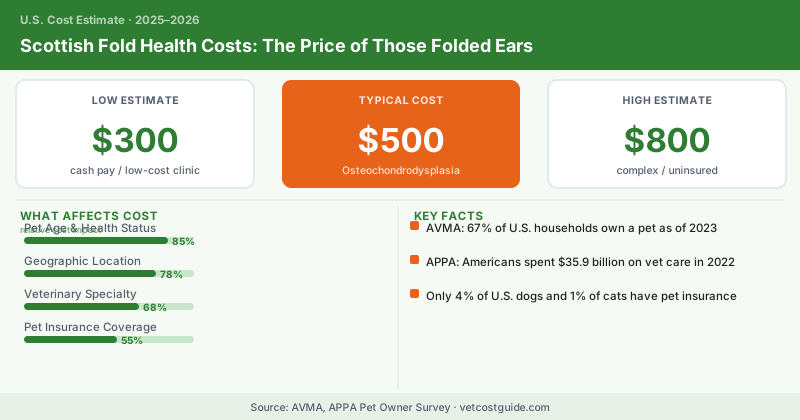
| Osteochondrodysplasia diagnosis (X-rays) | $300 | $800 | $500 |
| Lifetime arthritis/pain management | $2000 | $8000 | $4500 |
| Joint injections/specialist care | $400 | $1500 | $800 |
| PKD screening | $200 | $500 | $300 |
| HCM cardiac screening | $400 | $900 | $600 |
| Dental & routine care (lifetime) | $3500 | $7000 | $5000 |
That arthritis-management line is the one that defines a Fold’s lifetime cost. You’re looking at pain medication, joint supplements, possible injections, and regular monitoring — for the cat’s entire life. It’s a chronic commitment closer to managing diabetes than treating a one-time injury, and the budgeting mindset in our cat diabetes treatment cost guide applies here too.
The other inherited risks
Scottish Folds also share risk for polycystic kidney disease and HCM — the same heart and kidney issues that plague several pedigreed breeds. Reputable breeders screen for both. The folded-ear gene, though, can’t be screened away while keeping the look that makes the breed.
- Lifetime vet care for a Scottish Fold runs $9,000–$16,000, much of it joint-related.
- The folded-ear mutation guarantees some degree of skeletal disease — there is no fold without it.
- Expect lifelong arthritis and pain management; this is a chronic, ongoing cost.
- Insure as a kitten, and choose breeders who screen for PKD and HCM.
The ethics-and-money overlap
Here’s the honest part: many vets and welfare organizations discourage breeding Scottish Folds because the defining trait causes guaranteed suffering. If you already have one or are committed to the breed, that’s your choice — but plan financially for lifelong joint care, and never reward a breeder who pairs two folded cats (which produces the most severe, painful skeletal disease).
Insurance helps enormously here because the arthritis is chronic and predictable. Start before any joint changes are noted on an exam. Read pet insurance how it works and compare pet insurance cost per month.
Never buy a kitten from a fold-to-fold breeding (both parents have folded ears). It produces the most severe, painful skeletal deformities. Responsible breeders pair a folded cat with a straight-eared one — and even that carries risk. If a breeder won’t discuss this, walk away.
The yearly plan
Standard kitten care applies — cat vaccination cost, spaying or cat neuter cost — but build in joint monitoring from the start. Catch arthritis early and you manage it cheaply with supplements and weight control; let it progress and you’re into specialist visits and stronger medications.
Why early management saves real money
The arthritis in a Scottish Fold is going to happen — but how much it costs you depends heavily on when you start managing it. Catch the joint changes early, while the cat is young, and you control it with weight management, omega-3 and joint supplements, and environmental tweaks (ramps, soft bedding, easy-access litter boxes) that cost relatively little. Wait until the cat is limping and reluctant to move, and you’re into prescription pain medications, possible joint injections, and specialist orthopedic visits that run far higher.
That’s why baseline X-rays early in life are worth the few hundred dollars. They show how much skeletal involvement your individual cat has, and they give your vet a starting point to track progression. A Fold with mild changes managed from kittenhood can live a comfortable life on a modest budget; a severely affected cat caught late is one of the more expensive chronic-pain cases in feline medicine.
Keep an emergency fund or a CareCredit for vet bills account ready, and schedule regular checkups (average vet visit cost) to track joint health. A Scottish Fold can live a comfortable, loving life — but only with an owner who’s funded and committed to managing the disease baked into those famous ears.
Frequently Asked Questions
Scottish Fold lifetime orthopedic costs typically range from $9,000 to $16,000 due to the cartilage defect affecting their joints. This includes diagnostic imaging, pain management, and treatment for arthritis and joint degeneration that develop progressively throughout the cat's life.
Most pet insurance plans classify Scottish Fold joint and ear conditions as pre-existing or hereditary, which are typically excluded from coverage. You can expect to pay out-of-pocket for most orthopedic treatments, though some insurers offer limited coverage if you purchase a policy before symptoms appear.
Scottish Folds usually show signs of cartilage-related joint issues between 3 and 6 years of age, though early degenerative changes begin much earlier. Early intervention with weight management, joint supplements, and pain medications starting in young adulthood can help slow progression and reduce long-term costs.