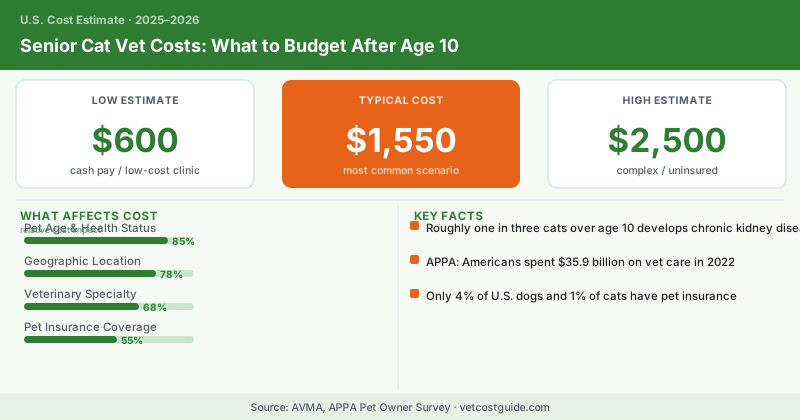
What does it actually cost to keep a 12-year-old cat healthy? More than most owners budget for, and the jump happens faster than you’d think. Senior cat vet costs typically run $600–$2,500+ per year, roughly double what a healthy young adult cat costs, driven almost entirely by more frequent exams, routine bloodwork, and management of age-related conditions.
The American Association of Feline Practitioners classifies cats as senior starting around age 11, and its senior care guidelines specifically recommend moving from annual to twice-yearly wellness exams at that point — a change that alone adds $100–$200 a year before any diagnostics or treatment even enter the picture.
The baseline: routine senior wellness care
| Item | Frequency | Cost per Visit | Annual Cost |
|---|---|---|---|
| Wellness exam | 2x/year | $50–$90 | $100–$180 |
| Senior bloodwork panel | 2x/year | $150–$250 | $300–$500 |
| Urinalysis | 2x/year | $40–$70 | $80–$140 |
| Blood pressure check | 2x/year | $25–$40 | $50–$80 |
| Dental cleaning | Every 1–2 years | $300–$700 | $150–$700 (averaged) |
| Core vaccines | As needed | $20–$50 | $20–$100 |
That baseline alone lands around $700–$1,700 per year for a senior cat with no diagnosed chronic condition — already well above what most owners spend on a healthy 3-year-old.
Where the real cost jumps come from
Roughly one in three cats over age 10 develops chronic kidney disease at some point, according to veterinary nephrology research widely cited by feline specialists, making it the single most common senior cat diagnosis. Managing it means prescription renal diets ($50–$90/month), regular bloodwork to track kidney values, and sometimes subcutaneous fluids you learn to administer at home.
Hyperthyroidism is the other major senior cat condition, and it’s common enough that most vets test thyroid levels at every senior bloodwork panel. Left untreated it accelerates weight loss and heart strain; treatment options range from daily medication ($20–$40/month) to a one-time radioactive iodine treatment ($1,200–$1,800) that often cures it permanently. See our dedicated guide on cat hyperthyroidism treatment cost for the full breakdown.
- Senior cat baseline wellness care runs $700–$1,700/year even without a diagnosed condition.
- Twice-yearly exams and bloodwork are the standard of care recommended starting around age 10–11.
- Kidney disease and hyperthyroidism are the two most common — and most budget-impacting — senior cat diagnoses.
- Dental disease often gets more expensive to treat the longer it’s ignored, since older cats need more pre-anesthetic screening.
Arthritis: the quiet expensive one
Feline arthritis is dramatically underdiagnosed because cats hide pain well and simply become less active rather than visibly limping. Studies referenced by the American Association of Feline Practitioners suggest degenerative joint changes are present in a majority of cats over age 12 on X-rays, even when owners report no symptoms. Management runs $30–$80/month for joint supplements and pain medication, plus occasional X-rays ($150–$300) to monitor progression.
- Skipping bloodwork because “she seems fine.” Kidney and thyroid disease are both silent in early stages — by the time symptoms are obvious, treatment is more intensive and expensive.
- Anesthesia hesitation for dental care. Many owners delay senior dental cleanings out of anesthesia fear, but modern pre-anesthetic bloodwork and monitoring make it safe for most seniors — and untreated dental disease causes real pain and can worsen kidney and heart function.
- Underestimating end-of-life costs. Hospice-style care, subcutaneous fluids, and specialized diets in a cat’s final year can add $500–$2,000, and it’s worth budgeting for emotionally and financially in advance.
Should you get pet insurance for an old cat?
Generally, no — not for the first time, anyway. Premiums for cats over 10 climb steeply, and many conditions common in seniors (kidney disease, hyperthyroidism, dental disease) may already be excluded if diagnosed before you enroll. If your cat has been insured since younger years, keep the policy. If not, a dedicated savings account earmarked for senior care, paired with twice-yearly wellness visits to catch problems early, is usually the better financial move. Compare the math in our is pet insurance worth it guide before deciding.
Budgeting for the senior years
Set aside $75–$150 a month specifically for senior cat care once your cat turns 10 — that covers the baseline wellness costs with a cushion for one unexpected diagnostic or treatment. It won’t cover a major surgery or an aggressive cancer diagnosis, but it keeps routine senior care from becoming a financial surprise every six months.
Frequently Asked Questions
Most veterinary guidelines, including those from the American Association of Feline Practitioners, classify cats as mature at 7–10 years, senior at 11–14 years, and geriatric at 15 and older. Veterinary care recommendations typically shift to twice-yearly exams starting around age 10–11, regardless of the exact label used.
Cats age faster than humans in relative terms, and conditions like kidney disease, hyperthyroidism, and dental disease can progress significantly within six months. The American Association of Feline Practitioners' senior care guidelines recommend semi-annual wellness exams specifically because catching these conditions early is both cheaper and more effective than treating them once advanced.
Pet insurance becomes progressively less cost-effective as cats age because premiums rise sharply for senior pets and many chronic conditions common in older cats may already be excluded as pre-existing. For cats over 10, many owners find a dedicated savings account or a wellness plan covering routine bloodwork provides better value than a traditional insurance policy.