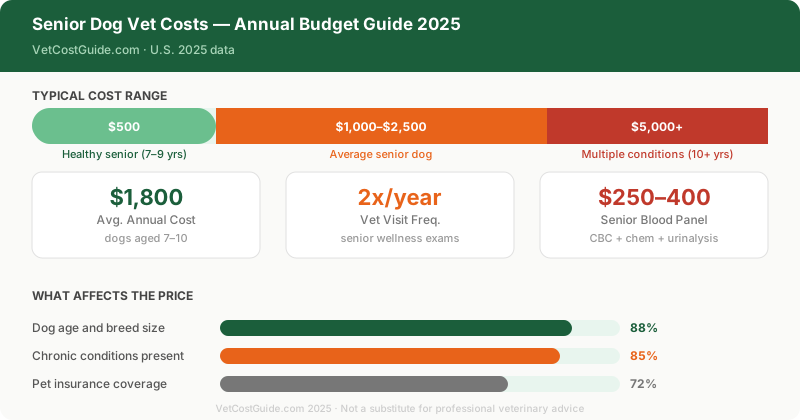
The jump from $800/year in vet bills to $3,000/year doesn’t happen gradually — it tends to happen all at once, somewhere around age 7. That’s when the twice-yearly exams become necessary, the bloodwork panel gets longer, the dental cleanings happen more often, and the first chronic condition shows up. For giant breeds it happens at 5. For small breeds it might not fully hit until 10. But it hits. Planning ahead is genuinely the difference between affordable senior care and financial crisis at the worst possible moment.
- Twice-yearly senior wellness exams cost $100–$160 each — most vets recommend this frequency starting at age 7.
- Senior bloodwork panels (CBC, chemistry, urinalysis, thyroid) cost $200–$400 and are recommended twice yearly.
- Arthritis management runs $50–$200/month depending on medications, supplements, and therapy.
- A single emergency vet visit for a senior dog averages $1,000–$3,000 — more reason for robust insurance or a dedicated emergency fund.
Senior Dog Annual Vet Cost Breakdown
| Service | Low Estimate | High Estimate | Frequency |
|---|---|---|---|
| Senior wellness exam | $65 | $120 | 2x/year |
| Senior bloodwork (CBC + chemistry + UA + thyroid) | $200 | $400 | 1–2x/year |
| Dental cleaning (no extractions) | $300 | $700 | Every 1–2 years |
| Dental extractions (if needed) | $150 | $500 per tooth | As needed |
| Core vaccine boosters (rabies + DHPP) | $50 | $120 | Per schedule |
| Heartworm/flea/tick prevention | $150 | $400 | Annual |
| Arthritis medications (NSAID monthly) | $30 | $80 | Monthly |
| Joint supplements (fish oil, glucosamine) | $20 | $60 | Monthly |
| Thyroid medication (hypothyroidism) | $25 | $60 | Monthly |
| Cardiac medication (if heart disease) | $50 | $200 | Monthly |
| X-rays for orthopedic assessment | $150 | $400 | As needed |
| Total annual routine cost (healthy senior) | $1,000 | $2,500 | Annual |
| Total annual cost (senior with 1–2 conditions) | $2,000 | $4,000+ | Annual |
Why Everything Changes at Age 7
Six months in a dog’s life isn’t six months — it’s closer to 3–4 human years depending on the breed. That’s why veterinarians who used to see your dog once a year now want to see them twice. A heart murmur that was Grade 1 in January can be Grade 3 by July. Kidney disease that would have shown on bloodwork in spring can become a crisis by fall if the spring bloodwork doesn’t happen.
Twice-yearly exams aren’t a revenue strategy. They’re a timing adjustment to match how quickly dogs age. The clinical argument is simple: catching a Stage 2 heart murmur at a routine exam costs $130 for the visit. Missing it and addressing Stage 4 heart failure in an emergency costs $2,000–$4,000 for the acute hospitalization alone.
Senior bloodwork screens for the conditions that change management before they cause visible symptoms. A comprehensive senior panel includes:
- CBC (complete blood count): Screens for anemia, infection, clotting disorders
- Chemistry panel: Kidney values (BUN, creatinine, SDMA), liver enzymes, blood glucose, electrolytes
- Urinalysis with culture if indicated: Kidney concentrating ability, infection, protein loss
- Thyroid (T4): Hypothyroidism is common in older dogs; easily treated once diagnosed
Cost: $200–$400 for the full panel, usually bundled with the semi-annual exam. Early kidney disease caught on bloodwork allows dietary changes and medication that can extend life by months to years. That same condition caught in uremic crisis costs $1,000–$3,000 for the acute hospitalization before management even begins.
The Common Conditions and What They Cost
Osteoarthritis affects an estimated 80% of dogs over age 8. It’s quiet — many arthritic dogs still wag their tails, still greet visitors, still seem “fine.” But veterinary pain scoring tools regularly reveal how much quality-of-life improvement is possible with treatment.
Management costs:
- NSAIDs (Galliprant, Carprofen, Meloxicam): $30–$80/month depending on size
- Librela (monoclonal antibody injection): $80–$120/month
- Joint supplements (glucosamine, fish oil): $20–$50/month
- Underwater treadmill or physical therapy: $50–$100/session, 4–8 sessions initially
- Total monthly arthritis management: $50–$200 depending on severity and approach
Hypothyroidism develops commonly in middle-aged to older medium and large breeds. Weight gain, lethargy, cold intolerance, and hair loss are the classic signs. Treatment is daily oral levothyroxine at $25–$60/month — straightforward once diagnosed. Initial diagnosis bloodwork: $100–$200. Follow-up T4 recheck at 4–6 weeks: $50–$80.
Cardiac disease (myxomatous mitral valve disease or dilated cardiomyopathy) is where breed predispositions hit hardest. Small and medium breeds — Cavalier King Charles Spaniels, Dachshunds, Poodles — face elevated rates of mitral valve disease. Monitoring with a stethoscope at each exam costs nothing extra; an echocardiogram for staging runs $700–$1,200 at a cardiologist. Medical management (Vetmedin, enalapril, furosemide) once initiated costs $80–$200/month.
Dental disease accelerates in senior years. Cleanings that happened every two to three years in a younger dog may be needed annually, and extractions become more common. Budget $400–$1,000/year for dental care in senior dogs with established periodontal disease.
Cognitive dysfunction syndrome — the dog equivalent of dementia — affects an estimated 14–35% of dogs over age 8. Disorientation, altered sleep cycles, anxiety, and loss of learned behaviors are the signs. Selegiline ($30–$80/month) and supplements like Senilife or Aktivait ($30–$50/month) can help manage symptoms, though there’s no cure.
What Makes Some Senior Dogs Much More Expensive
Breed size predicts trajectory. Giant breeds (Great Danes, St. Bernards, Mastiffs) are senior at 5–6 and have shorter lifespans; their senior costs escalate faster but over fewer years. Small breeds may see costs under $1,500/year through age 10, then accelerate. The lifetime math can be similar — it’s the timing that differs.
Breed-specific predispositions matter enormously. Cavalier King Charles Spaniels face near-universal cardiac disease by middle age. German Shepherds have elevated rates of hip dysplasia and degenerative myelopathy. Golden Retrievers have significantly higher cancer rates than the general dog population. Knowing your breed’s risk profile helps you anticipate rather than react.
Lifelong weight management. Overweight dogs develop arthritis faster, have worse surgical outcomes, and tend toward more metabolic disease in senior years. Keeping your dog at a healthy weight during adult years is one of the best investments in lower senior veterinary costs.
- Continuing annual exams when twice-yearly is recommended: Conditions that progress rapidly in senior dogs — kidney disease, heart murmurs, dental abscesses — can transition from mild to crisis in six months. Annual exams leave a dangerous gap.
- Delaying pain assessment for arthritis: Stoic dogs don’t show pain the way humans do. Many dogs with severely arthritic hips still wag their tails and greet visitors. Veterinary pain assessment scoring tools and therapeutic trials of NSAIDs often reveal how much quality-of-life improvement is possible.
- Over-vaccinating senior dogs: AAHA guidelines support extended DHPP intervals (every 3 years) for adult dogs. Senior dogs with chronic illness or on immunosuppressive medications may benefit from modified vaccine schedules — discuss with your vet rather than auto-renewing annually.
- Not having the end-of-life cost conversation in advance: Senior dog care can escalate suddenly. Knowing what you’re willing to spend — and what your vet considers medically appropriate — avoids making $10,000 surgical decisions in an emergency room at midnight.
Pet Insurance for Senior Dogs: The Hard Math
Enrolling a senior dog who doesn’t already have insurance is difficult and expensive. Pre-existing conditions — arthritis, cardiac disease, dental disease — are excluded, and premiums for dogs over age 7 are significantly higher than for young adults.
But if your dog is already insured and aging, don’t cancel. The value of insurance for a senior dog is the catastrophic coverage: emergency intestinal obstruction surgery ($3,000–$6,000), cancer treatment ($5,000–$15,000), acute kidney injury hospitalization ($2,000–$4,000). These are the events that force impossible financial decisions — insurance is what keeps them manageable.
For dogs not yet insured at age 5–6, consider enrolling before conditions develop. Premium increases at ages 6–8 are significant but may still be worth it compared to the alternative of self-insuring against $5,000–$15,000 events with no cushion.
How to Budget Senior Care Without Getting Caught Short
Set aside $2,000–$4,000/year in a dedicated pet health account starting when your dog turns 7. This covers routine senior care and the occasional unexpected expense without financial strain.
Front-load dental care. Getting teeth in good shape before the senior years — reducing the need for costly extractions later — is one of the best investments you can make before age 7 arrives.
Ask about senior wellness packages. Some practices bundle semi-annual exams plus bloodwork at a discount over individual pricing. The math is worth checking before you start ordering à la carte.
Consider veterinary school options for specialist referrals. Cardiologist echocardiograms, orthopedic consultations, and oncology evaluations at veterinary teaching hospitals (Cornell, UC Davis, Michigan State, Colorado State) typically cost 30–50% less than private specialty hospitals with the same clinical quality.
FAQ
When is a dog considered “senior”? The general guideline is age 7 for most breeds. Giant breeds (over 100 lbs) reach senior status at 5–6. Small breeds under 20 lbs are often not truly geriatric until 10–12. These are guidelines, not bright lines — your individual dog’s health and the vet’s clinical assessment matter more than age alone.
How often should a senior dog see the vet? Twice yearly is the standard recommendation from AAHA and most veterinary internists for dogs 7 and older. Each visit should include a physical exam and ideally senior bloodwork at least once per year (many vets recommend twice yearly for dogs over 10).
Can I reduce senior vet visits to save money? Reducing to annual visits for a senior dog is a financially risky choice. Conditions caught early cost significantly less to manage than conditions discovered in crisis. The cost of one semi-annual exam and bloodwork ($300–$500) is often less than one day of hospitalization for an advanced condition that might have been caught earlier.
What is the most expensive senior dog condition? Cancer is the most financially devastating senior dog diagnosis, with treatment costs of $5,000–$25,000 or more depending on cancer type and treatment approach. Cancer affects an estimated 50% of dogs over age 10. After cancer, spinal cord disease (IVDD, degenerative myelopathy), cardiac disease requiring specialist management, and severe orthopedic conditions are the next highest-cost categories.
Frequently Asked Questions
A single wellness exam for a senior dog (age 7+) typically costs $75-150, but most vets recommend twice-yearly exams starting at age 7, bringing annual exam costs to $150-300. These exams often include extended bloodwork panels that can add $200-400 per visit, so budget $350-700 annually just for exams and basic lab work.
Most pet insurance plans cover senior dogs but often exclude pre-existing conditions diagnosed before enrollment, and many have age limits (some stop covering dogs over 10-14 years old). Out-of-pocket costs for seniors typically run $1,500-4,000 yearly after insurance deductibles ($250-1,000) and co-pays, since chronic disease management and dental work often have limited or no coverage.
Vets typically recommend annual or twice-yearly professional dental cleanings for senior dogs, costing $500-1,500 per cleaning depending on tooth extractions needed and your location. Preventive cleanings without extractions average $600-800, but if advanced periodontal disease requires multiple tooth removals, costs can exceed $2,000 per procedure.