Q: My dog just turned 7. The vet mentioned “senior” bloodwork. Is this really necessary or is it just an upsell?
A: It’s genuinely necessary — and here’s why. A 7-year-old dog is roughly equivalent to a 44–56-year-old human in biological terms (varies significantly by size and breed). At that life stage, certain conditions start developing silently: chronic kidney disease, early liver dysfunction, thyroid abnormalities, diabetes, cardiac changes. These diseases are asymptomatic for months to years. Bloodwork establishes a baseline that makes future changes detectable.
The question isn’t whether your senior dog’s annual bloodwork is worth $150. It’s whether you want to know about kidney disease at stage 1 — treatable, manageable, years of good quality life ahead — or at stage 3–4, when there are few options left.
That framing sets up everything else in this guide.
When Does “Senior” Start?
The AAHA Senior Care Guidelines use this general framework:
| Size / Species | Senior Age |
|---|---|
| Small dogs (under 20 lbs) | 10–12 years |
| Medium dogs (20–50 lbs) | 8–10 years |
| Large dogs (50–90 lbs) | 7–8 years |
| Giant dogs (over 90 lbs) | 5–6 years |
| Cats | 10–11 years (senior); 15+ years (super-senior) |
Giant breeds like Great Danes and Saint Bernards age fastest — a 5-year-old Great Dane is already in the statistical age range for many age-related diseases. A Chihuahua at 7 is middle-aged. Breed matters enormously in how you think about senior care timing.
What Changes at the First Senior Exam
Q: What does my vet actually do differently at a senior wellness visit?
A: Several things shift in scope and frequency.
Exam frequency: AAHA recommends senior pets be seen every 6 months rather than annually. The reasoning is practical — diseases that were early-stage in July can reach advanced stages by the following July. A December exam catches the change while intervention options still exist.
Blood pressure measurement: Hypertension is common in senior cats (often secondary to hyperthyroidism or kidney disease) and in some senior dogs. Takes 5 minutes and costs $20–$40. It’s not always included in a standard exam unless you ask or your vet has flagged a reason for concern.
Senior wellness bloodwork panel: A comprehensive metabolic panel, complete blood count, and urinalysis run $150–$300 at most general practice clinics. This catches kidney disease (creatinine, BUN, SDMA), liver dysfunction (ALT, ALP, bilirubin), anemia, diabetes (glucose), thyroid abnormalities (T4), and electrolyte imbalances.
SDMA — an early kidney marker: Symmetric dimethylarginine is a kidney biomarker that rises earlier in kidney disease than creatinine — potentially detecting chronic kidney disease before 40% of kidney function is lost. Many senior panels include it automatically. If yours doesn’t, ask.
The Most Common Senior Conditions (By Species)
Q: What should I be watching for in my 10-year-old Labrador?
Dogs:
Arthritis and musculoskeletal disease: The most common senior dog condition. Signs are often subtle and dismissed as “slowing down with age” — reluctance to jump into the car, stiffness after resting, less enthusiasm for stairs. A study in the Veterinary Journal estimated 80% of dogs over 8 have radiographic evidence of arthritis. Management options are genuinely good: NSAIDs, joint supplements, physical therapy, laser therapy, and newer medications like Librela (bedinvetmab).
Cancer: The American Veterinary Medical Foundation reports cancer is the leading cause of death in dogs over 10, accounting for nearly half of all deaths in that age group. Regular palpation for lumps, unexplained weight loss, and any persistent behavioral change warrants evaluation.
Cognitive Dysfunction Syndrome (CDS): Often called “doggy dementia,” CDS affects an estimated 28% of dogs aged 11–12 and over 68% of dogs aged 15–16 per published research. Signs: getting lost in familiar environments, staring at walls, disrupted sleep cycles, apparent confusion, loss of house training. Medication, dietary supplements, and environmental enrichment all have some supporting evidence.
Cats:
Hyperthyroidism: Affects roughly 10% of cats over age 10. Caused by a benign thyroid tumor overproducing thyroid hormone. Signs: weight loss despite ravenous appetite, increased vocalization, hyperactivity, vomiting. Diagnosed on bloodwork (T4). Highly treatable via daily methimazole medication ($30–$60/month), prescription diet, radioactive iodine treatment ($1,500–$2,500, curative), or surgery. Early detection matters — uncontrolled hyperthyroidism damages the heart and kidneys.
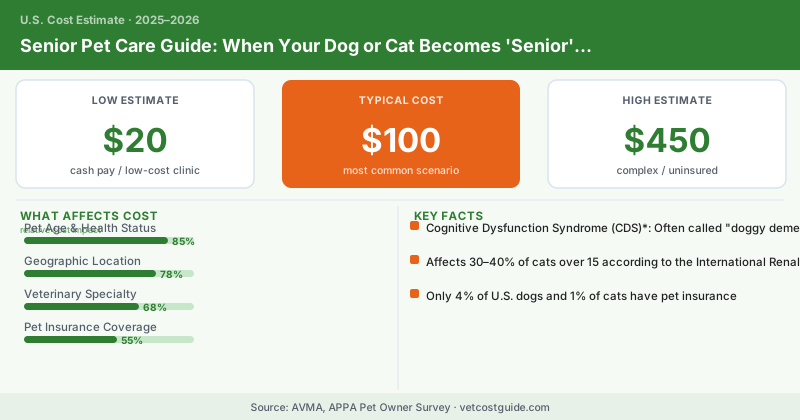
Chronic Kidney Disease (CKD): The most common cause of death in older cats. Affects 30–40% of cats over 15 according to the International Renal Interest Society. Managed — not cured — with prescription diet, subcutaneous fluids (many owners learn to do this at home for $50–$100/month in supplies), phosphorus binders, and other medications. Prognosis depends heavily on stage at diagnosis.
Diabetes mellitus: More common in overweight male cats, neutered cats, and certain breeds like Burmese. Managed with twice-daily insulin injections and dietary change. Costs $50–$150/month in supplies depending on insulin type.
Senior Wellness Costs: Adult vs. Senior Care
| Service | Adult Pet (Annual) | Senior Pet (Twice-Yearly) |
|---|---|---|
| Physical exam | $50–$100 | $100–$200 (x2) |
| Basic bloodwork | $80–$150 | $150–$300 (comprehensive panel) |
| Urinalysis | $30–$60 | $30–$60 |
| Blood pressure check | Rarely performed | $20–$40 |
| Thyroid test (T4) | Not routine | Included in senior panel |
| Dental cleaning | Every 1–3 years | Every 1–2 years |
| Estimated annual total | $250–$450 | $450–$900 |
End-of-Life Planning: A Conversation Worth Having Early
Q: How do I know when it’s time? And what does euthanasia cost?
Quality of life assessments — like the HHHHHMM scale developed by Dr. Alice Villalobos — provide a structured way to evaluate pain, appetite, hydration, hygiene, happiness, mobility, and “more good days than bad.” Having this framework before a crisis makes an impossible decision slightly more manageable.
In-clinic euthanasia: $50–$300 depending on size of pet and location. Most clinics include brief private time with your pet before and after.
In-home euthanasia: $200–$500. A veterinarian comes to your home; your pet passes in a familiar environment. Services like Lap of Love and Compassion4Paws provide this in most US metro areas. For many owners — and many pets — it’s worth the premium.
The best time to discuss senior care planning, quality of life priorities, and end-of-life wishes with your veterinarian is before there’s a crisis. At your pet’s first “senior” wellness visit, ask: What conditions is this breed prone to? What early signs should I watch for? What’s the monitoring plan? What would you do if you found X? Having these conversations while your pet is healthy and you’re calm makes all subsequent decisions clearer.
Senior pets are often the most beloved companions — deepened by years of shared history. The extra investment in twice-yearly exams and more thorough bloodwork isn’t just about extending life. It’s about ensuring that the years you do have together aren’t spent managing advanced disease that was already in the charts, quietly waiting to be found.
Frequently Asked Questions
Senior bloodwork typically costs $150–$400 depending on which panels your vet recommends and whether it includes a urinalysis. A basic senior panel (chemistry and CBC) runs $150–$250, while comprehensive panels that check thyroid, kidney function, and liver enzymes cost $300–$400 at most US veterinary clinics.
Most pet insurance plans do not cover routine wellness exams or preventive bloodwork, as these are considered maintenance care rather than illness treatment. However, some policies offer optional wellness riders (adding $10–$25/month) that reimburse 70–90% of senior screening costs, though you'll still pay out-of-pocket upfront.
Vets recommend twice-yearly bloodwork for senior dogs (7+) and cats (10+), versus once yearly for younger pets. This means scheduling exams and bloodwork every 6 months rather than annually, allowing earlier detection of silent conditions like kidney disease or thyroid problems that progress faster in older pets.