Most people assume snakes are low-maintenance pets that never need a vet. That assumption holds until the day your ball python starts wheezing, your corn snake refuses food for three months, or you notice a soft lump under the scales. Then you discover two things fast: exotic reptile vets exist, and they’re not cheap.
Here’s a realistic look at what snake veterinary care costs — both routine and when things go wrong.
Finding a Snake Vet: The First Problem
Not every exotic animal vet sees snakes. A practice that specializes in rabbits and guinea pigs may have no experience with reptile medicine. Before you need emergency care, find a reptile-experienced exotic vet in your area.
The Association of Reptilian and Amphibian Veterinarians (ARAV) maintains a member directory at arav.org. When calling clinics, ask specifically whether the vet regularly sees snakes — not just “reptiles.” Lizard experience and snake experience overlap but aren’t identical.
In some rural areas, a reptile-experienced vet may be 60–90 minutes away. That matters a lot in an emergency.
Routine Exam Costs
| Service | Typical Cost | Notes |
|---|---|---|
| Initial exam (new patient) | $65–$150 | Exotic surcharge; includes history and physical |
| Annual wellness exam | $55–$120 | Subsequent years |
| Fecal parasite exam (flotation) | $25–$55 | Checks for nematodes, protozoa |
| Cryptosporidium PCR test | $80–$150 | Specific test for crypto (not on standard fecal) |
| Bloodwork (CBC + chemistry) | $150–$350 | Reptile panels differ from mammal panels |
| Radiographs (2 views) | $100–$250 | Checks for respiratory fluid, foreign body |
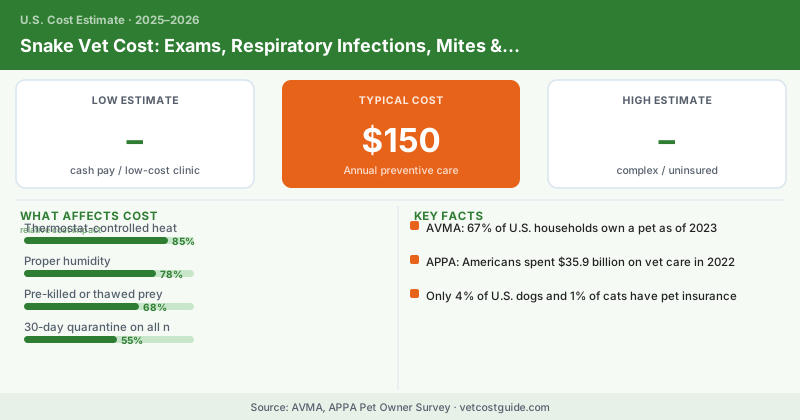
| Annual preventive care total | $150–$400 | Healthy snake |
Most snake owners who pursue preventive care are surprised by how reasonable annual exam costs are. The bigger expenses come when something’s wrong.
Common Snake Health Problems and Costs
Snake medicine involves a distinct set of conditions you won’t see in dogs or cats. The ARAV reports that respiratory infections, parasites, and husbandry-related conditions (retained shed, thermal burns) account for the majority of snake vet visits.
| Condition | Diagnostic Cost | Treatment Cost | Notes |
|---|---|---|---|
| Respiratory infection (URI) | $100–$250 | Antibiotics: $50–$200 | Common; often husbandry-related |
| Mites (Ophionyssus) | $60–$150 | Ivermectin/topical: $50–$150 | Treat snake AND enclosure |
| Retained eye cap (spectacle) | $60–$120 | Removal: $50–$100 | Soaking first; vet if DIY fails |
| Stomatitis (mouth rot) | $100–$200 | Antibiotics + cleaning: $100–$300 | Can progress rapidly |
| Inclusion body disease (IBD) | $200–$500 | No treatment; euthanasia | Fatal boid virus; highly contagious |
| Cryptosporidiosis | $150–$300 (diagnosis) | Supportive care only | No effective cure in snakes |
| Foreign body (eaten substrate) | $200–$400 | Surgery: $800–$2,500 | Loose substrate swallowed with prey |
| Abscess (subcutaneous) | $150–$250 | Surgical removal: $300–$800 | Reptile abscesses are solid, not fluid |
| Reproductive problems (egg binding) | $200–$400 | Oxytocin or surgery: $500–$2,000 | Females more prone if not properly set up |
Respiratory Infections: The Most Common Snake Illness
Respiratory infections are the bread-and-butter of snake medicine. The symptoms — open-mouth breathing, wheezing, mucus, or a snake that holds its head elevated — are hard to miss. Most URIs in snakes are bacterial and respond to antibiotics, but the underlying cause is almost always a husbandry issue: enclosure too cold, too humid, or too dry.
Treatment involves identifying the causative organism (if possible), administering injectable or oral antibiotics, and correcting whatever husbandry problem caused the immune suppression. A straightforward URI: $150–$400 total. A complicated URI with pneumonia and hospitalization: $500–$1,200.
IBD is a fatal viral disease affecting boas and pythons — it cannot be cured. Symptoms include regurgitation, neurological signs (the snake unable to right itself, stargazing), and chronic illness. Diagnosis requires biopsy or PCR testing.
If you keep multiple boas or pythons and one is diagnosed with IBD, strict quarantine of all animals is essential — the virus spreads through mites and direct contact. Any snake exposed to an IBD-positive animal should be quarantined for 6+ months and tested before reintegrating with other animals.
Cost to diagnose: $200–$500. Cost to treat: zero — there is no treatment. The responsible outcome for a confirmed IBD-positive snake is euthanasia to prevent spread.
Snake Mites: Cheap to Treat, Expensive if Ignored
Ophionyssus natricis — the snake mite — is a small parasite that feeds on blood and spreads between snakes through contact or contaminated equipment. You can see them with the naked eye: tiny moving dots, often around the eyes and under chin scales.
Treating a mite infestation requires treating the snake AND completely breaking down and disinfecting the enclosure. A single treatment round typically costs $50–$150 for medication (ivermectin injection or topical treatment prescribed by your vet). Ignore mites and they proliferate quickly, cause anemia in smaller snakes, and can transmit other diseases.
Never use over-the-counter pet store reptile mite sprays without verifying they’re safe for your specific snake species. Some products labeled as safe for reptiles are toxic to certain species. Your exotic vet should prescribe mite treatment — the cost difference versus guessing wrong is significant.
Husbandry: The Biggest Factor in Snake Vet Costs
The majority of snake health problems are husbandry-related — meaning they’re preventable. ARAV veterinarians consistently report that improper temperatures, incorrect humidity, loose particle substrate, and inadequate quarantine of new animals account for most snake illness they treat.
A few basics that prevent expensive vet bills:
- Thermostat-controlled heat — never use heat rocks; use under-tank heaters or radiant heat panels with thermostats
- Proper humidity — corn snakes need 40–60%; ball pythons need 60–80%; too dry causes retained sheds, too wet causes scale rot
- Pre-killed or thawed prey only — live prey injures snakes; thawed frozen is safer
- 30-day quarantine on all new animals — respiratory infections and mites spread when new animals are introduced without quarantine
Emergency Snake Care
Emergency exotic vet visits for snakes typically run $200–$600 for the visit and initial diagnostics. Surgery — for egg binding, foreign body removal, or abscess removal — adds $800–$2,500 on top. If the nearest reptile-experienced emergency facility is a specialty center, add 30–50% to all estimates.
Frequently Asked Questions
Does my snake really need annual vet visits? Recommended, yes. A vet experienced with snakes can catch early respiratory changes, check for parasites, assess body condition, and establish a relationship before you need emergency care. A $100 annual exam is significantly cheaper than a $1,500 emergency visit for a condition that built up undetected.
Can I treat respiratory infections at home? No. Respiratory infections require prescription antibiotics — the specific type depends on the causative organism, which requires culture or educated clinical judgment from a veterinarian. Using the wrong antibiotic or dose can harm your snake. See a vet.
How long do snakes live? It depends heavily on species. Corn snakes live 15–20 years. Ball pythons often live 20–30 years. Boa constrictors can exceed 30 years. That’s a multi-decade commitment to veterinary care for the long-lived species — something worth factoring into your ownership decision.
Frequently Asked Questions
A routine snake exam at an exotic veterinary specialist typically costs $60–$150, depending on your location and whether the vet is in a major metropolitan area. Some exotic practices may charge additional fees if diagnostic tests like X-rays or fecal exams are needed during the visit.
Most standard pet insurance plans do not cover exotic pets like snakes, though a few specialized exotic pet insurers offer limited coverage. You'll typically pay 100% out-of-pocket for snake veterinary care, making emergency treatments like respiratory infection therapy ($150–$500) a significant unplanned expense.
Treating a respiratory infection in snakes usually requires 2–4 weeks of antibiotics, often administered via injection every 48–72 hours, with total costs ranging from $150–$500 depending on severity and number of visits. Your vet will likely recommend follow-up exams to confirm the infection has cleared before treatment ends.