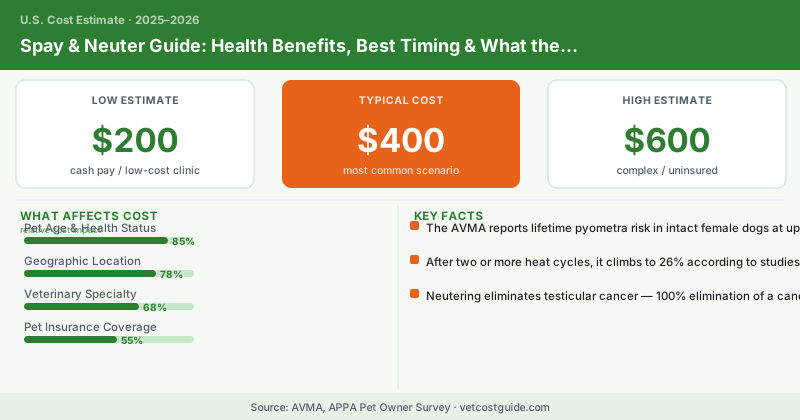
About 1 in 4 intact female dogs will develop pyometra — a life-threatening uterine infection — at some point in their lives. Emergency surgery for pyometra costs $2,000–$5,000. An elective spay on a healthy young dog? $200–$600. That math is pretty hard to argue with.
But somewhere between “I got a puppy!” and the first vet visit, the spay or neuter conversation gets complicated. Traditional advice says before 6 months. Newer research for large breeds says wait until 12–18 months. Some corners of the internet still argue against it entirely. Let’s cut through the noise with what the evidence actually shows, who should wait and who shouldn’t, and what you can expect to pay.
What the Surgery Actually Is
Spay (ovariohysterectomy): Surgical removal of the ovaries and uterus through an abdominal incision. Occasionally performed as an ovariectomy (ovaries only, leaving the uterus) in younger animals — common in Europe and gaining traction in the US. Both approaches eliminate reproductive capability and hormone production.
Neuter (orchiectomy): Surgical removal of both testicles through a small scrotal incision. In dogs, typically straightforward; in cats, an extremely quick procedure with minimal recovery.
Both are performed under general anesthesia. Recovery for routine spay/neuter in young, healthy animals runs 10–14 days of restricted activity. Most pets are back to normal behavior within 24–48 hours.
The Health Case for Spaying Female Dogs and Cats
Pyometra: The Reason You Can’t Ignore This
Pyometra is a bacterial infection of the uterus that develops in intact females, typically middle-aged to older. It occurs in the weeks after a heat cycle, when progesterone has primed the uterine lining for potential pregnancy and bacteria — usually E. coli — take advantage.
Two forms exist. Open pyometra drains visibly — pus-like vaginal discharge is often the first sign. Closed pyometra doesn’t drain; pus accumulates until the uterus ruptures or the dog develops septicemia. Dogs with closed pyometra can go from looking slightly off to life-threatening within 24–48 hours.
The treatment is emergency surgery — the same spay procedure, but now performed on a sick, potentially septic patient with a uterus that may weigh 10 times its normal size. The AVMA reports lifetime pyometra risk in intact female dogs at up to 23–24%. Spaying eliminates this risk entirely.
Mammary Cancer Risk
Spaying before the first heat cycle reduces lifetime mammary tumor risk to approximately 0.5%. After one heat cycle, the risk rises to 8%. After two or more heat cycles, it climbs to 26% according to studies reviewed by the AVMA. In dogs, roughly 50% of mammary tumors are malignant.
For cats, the numbers are starker: mammary cancer in cats is malignant in approximately 85–90% of cases, and intact females have significantly elevated lifetime risk compared to spayed cats.
Eliminating Ovarian and Uterine Cancer
Neither condition is common, but spaying eliminates both entirely.
The Health Case for Neutering Male Dogs and Cats
Neutering eliminates testicular cancer — 100% elimination of a cancer that affects 7% of intact male dogs according to the AVMA. It significantly reduces the risk of benign prostatic hyperplasia (BPH), which causes urinary and defecation problems and affects the majority of intact dogs by age 5.
For cats, neutering reduces roaming (which cuts the risk of fight injuries, FIV exposure, and car accidents), eliminates urine spraying in most cases, and dramatically reduces inter-cat aggression.
Behavioral Benefits
Neutered male dogs are less likely to roam — a real safety issue, since intact males have been documented traveling miles to find a mate — less likely to mark territory indoors with urine, and generally less reactive toward other intact males. Spayed females don’t cycle, eliminating the vocalization, spotting, and behavioral changes that occur every 6 months.
Worth saying clearly: spay/neuter doesn’t change a dog’s fundamental personality, doesn’t make them less of a guard dog, doesn’t make them lazy. Those myths persist, but they’re not supported by behavioral research.
Pyometra — a uterine infection in intact females — requires emergency surgery costing $2,000–$5,000 and can be fatal without rapid intervention. In a young, healthy dog, the same procedure performed electively costs $200–$600. Waiting for signs before spaying pays off most of the time — but about 1 in 4 intact females will eventually lose that gamble.
The Timing Debate: When Should Large Breed Dogs Be Spayed/Neutered?
This is where the science has genuinely evolved. Traditional guidance: before 6 months. Current AAHA guidelines: complicated, particularly for large and giant breeds.
A series of studies from UC Davis — starting with Golden Retrievers and later examining 35+ breeds — found that early spay/neuter (before 6 months) in some large breeds was associated with higher rates of certain joint disorders (cruciate ligament tears, hip dysplasia) and some cancers compared to dogs neutered at 12–24 months. The proposed mechanism: sex hormones influence musculoskeletal development, and removing them early in large breeds may affect bone plate closure.
Current guidance from AAHA and most board-certified specialists:
- Small and medium breeds (under 45 lbs): Traditional timing before 6 months is still appropriate. Joint concerns appear concentrated in larger breeds.
- Large breeds (45–80 lbs): Consider waiting until 12 months.
- Giant breeds: Consider waiting until 18–24 months.
- Cats: Traditional timing (4–6 months, or even earlier at shelters) remains appropriate — the musculoskeletal concerns documented in large-breed dogs haven’t been replicated in cats.
This conversation is worth having with your specific vet, who can factor in your dog’s breed, health, living situation, and your ability to safely manage an intact dog.
| Procedure | Low-Cost Clinic / Humane Society | General Practice Vet | Specialty/Urban Practice |
|---|---|---|---|
| Cat spay (female) | $35–$100 | $200–$350 | $300–$500 |
| Cat neuter (male) | $25–$70 | $150–$250 | $200–$350 |
| Small dog spay (under 30 lbs) | $50–$150 | $200–$400 | $350–$600 |
| Small dog neuter (under 30 lbs) | $45–$100 | $150–$300 | $250–$450 |
| Large dog spay (over 60 lbs) | $75–$200 | $350–$600 | $500–$900 |
| Large dog neuter (over 60 lbs) | $60–$150 | $250–$450 | $400–$700 |
Finding Low-Cost Spay/Neuter Programs
If cost is a barrier, resources exist specifically to make this accessible:
ASPCA’s Low-Cost Spay/Neuter Database: Searchable by zip code at aspca.org. Many communities have subsidized programs for income-qualified pet owners.
Local humane societies and shelters: Often offer spay/neuter services to the public at well below private practice rates — sometimes free for low-income households.
PetSmart Charities and Petco Love: Fund spay/neuter programs through their respective networks.
SpayUSA and SpayFirst: National referral networks for low-cost services.
Many owners are surprised when their vet recommends pre-anesthetic bloodwork for a 6-month-old kitten. Here’s the reasoning: a small percentage of young, apparently healthy animals have underlying conditions — rare congenital liver shunts, electrolyte abnormalities, early kidney dysfunction — that can complicate anesthesia. Pre-anesthetic bloodwork catches these before there’s a problem. It costs $80–$150 and may feel excessive for a young healthy animal, but the alternative is discovering a problem mid-procedure. Most vets consider it standard of care for any animal undergoing general anesthesia.
The Bottom Line
Spay and neuter are among the most routine surgeries in veterinary medicine — done thousands of times daily at general practice clinics. The risks are real but low in healthy animals. The benefits — particularly pyometra prevention, mammary cancer risk reduction, and behavioral improvements — are substantial and well-documented.
If you have a large or giant-breed dog, have a direct conversation with your vet about timing. For cats and small-to-medium dogs, traditional timing (4–6 months for cats, 6 months for smaller dogs) remains the consensus recommendation. And if cost is the sticking point, the low-cost options in most communities make this accessible without compromising your pet’s care.
Frequently Asked Questions
Spaying a female dog typically costs $200–$600, while neutering a male dog costs $150–$400, depending on your vet, location, and your dog's age and health status. These prices are significantly lower than emergency surgery for complications like pyometra, which can cost $2,000–$5,000.
Most standard pet insurance plans do not cover spay and neuter because they are considered elective preventive procedures rather than treatment for illness or injury. However, some pet insurance companies and low-cost clinic programs offer wellness add-ons or separate coverage for routine surgeries, so check with your provider or local animal shelter for affordable spay/neuter clinics.
Traditional veterinary advice recommends spaying or neutering before 6 months of age, though some vets now recommend waiting until growth plates close (12–18 months for larger breeds) to reduce certain orthopedic risks. Discuss the best timing for your individual dog's breed and health with your veterinarian, as the ideal age can vary.