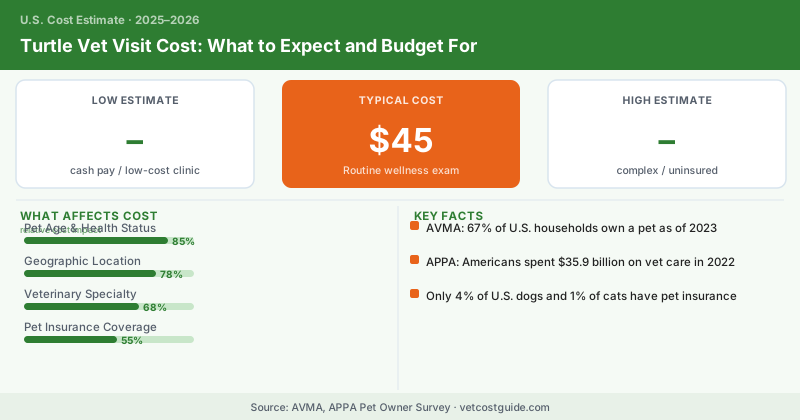
Q: Does a turtle actually need a vet? A: Yes — more than most owners assume, and the bill for skipping that assumption can run into the hundreds. Routine turtle vet visits cost $45–$130, while treating common issues like shell infections or metabolic bone disease typically runs $150–$600.
Pet turtles can live for decades with proper care — some species commonly reach 30-40 years or more — which means the veterinary relationship you build in year one matters for a very long ownership commitment. Finding an exotic-experienced vet early, rather than scrambling when something goes wrong, pays off over that long lifespan.
What visits and treatment typically cost
| Service | Typical Cost | Notes |
|---|---|---|
| Routine wellness exam | $45–$100 | Annual, shell/skin check included |
| Fecal parasite check | $25–$60 | Recommended for new turtles and annually |
| Shell infection treatment | $150–$400 | Bacterial or fungal, varies by severity |
| Metabolic bone disease treatment | $200–$600 | Includes correcting lighting/diet + medical care |
| Radiographs (egg-binding, injury) | $100–$250 | Often needed for internal assessment |
The two big preventable problems
Metabolic bone disease is by far the most common serious health issue in pet turtles, and it’s almost entirely preventable. It develops when a turtle doesn’t receive adequate UVB lighting (needed to synthesize vitamin D3) and sufficient dietary calcium, both essential for proper shell and bone development. Left uncorrected, it causes soft, pyramided, or deformed shells and can progress to fractures. Treatment involves correcting the husbandry problem and often calcium supplementation or medical management, running $200-$600 depending on severity.
Shell infections — bacterial or fungal — often start as small discolored patches or soft spots and can progress into the bone if untreated. These are frequently linked to poor water quality in aquatic turtle setups or injuries that go unnoticed. Early treatment with topical or systemic antibiotics is far cheaper than advanced infections requiring surgical debridement.
- Routine turtle exams cost $45–$130; common problems run $150–$600 to treat.
- Metabolic bone disease, caused by inadequate UVB and calcium, is the most common preventable issue.
- Shell infections often start small and are far cheaper to treat when caught early.
- Pet turtles can live decades — building a relationship with an exotic vet early pays off long-term.
Why UVB lighting is a medical, not just a setup, issue
Many new turtle owners treat UVB lighting as a nice-to-have rather than understanding it’s directly tied to their turtle’s bone and shell health. Without adequate UVB exposure, a turtle can’t properly process calcium regardless of how much is in its diet, setting up a cascade toward metabolic bone disease. Replacing UVB bulbs on schedule (most need replacement every 6-12 months even if they still produce visible light) is one of the cheapest, most effective preventive health measures a turtle owner can take.
- Assuming the bulb still works because it’s lit. UVB output degrades well before visible light does — replace bulbs on the manufacturer’s recommended schedule, not when they visibly dim or burn out.
- Ignoring soft spots or shell discoloration. Both are early warning signs of shell infection or bone disease — earlier treatment is dramatically cheaper and more effective than waiting.
- Skipping water quality maintenance for aquatic turtles. Poor water quality is a major driver of shell and skin infections — regular filtration maintenance and water changes are cheap insurance against costly vet bills.
Budgeting across a multi-decade lifespan
Given how long pet turtles live, thinking in terms of a single year’s cost undersells the real commitment. Budget $100–$250 annually for routine wellness exams and proper UVB bulb replacement, with a reserve for occasional treatment. Getting the lighting and diet right from day one is the single best way to avoid the most common and most expensive turtle health problems over a lifespan that, for many species, will outlast the family dog by several generations.
Frequently Asked Questions
A routine wellness exam for a pet turtle typically costs $45–$130 with an exotic-experienced veterinarian, while treatment for common issues like shell infections or metabolic bone disease can run $150–$600 depending on severity. Costs are generally higher than for cats or dogs because fewer vets have specific reptile training and equipment.
Metabolic bone disease develops when a turtle doesn't get adequate UVB lighting and calcium in its diet, both of which are essential for proper bone and shell development. It's one of the most common preventable health problems in pet turtles and can cause soft, deformed shells and fractures if not corrected with proper husbandry and veterinary treatment.
Yes, most exotic veterinarians recommend annual wellness exams for pet turtles, including a visual shell and skin check and sometimes bloodwork, since turtles can mask illness for a long time and problems like early shell infections or nutritional deficiencies are much easier and cheaper to correct when caught early.