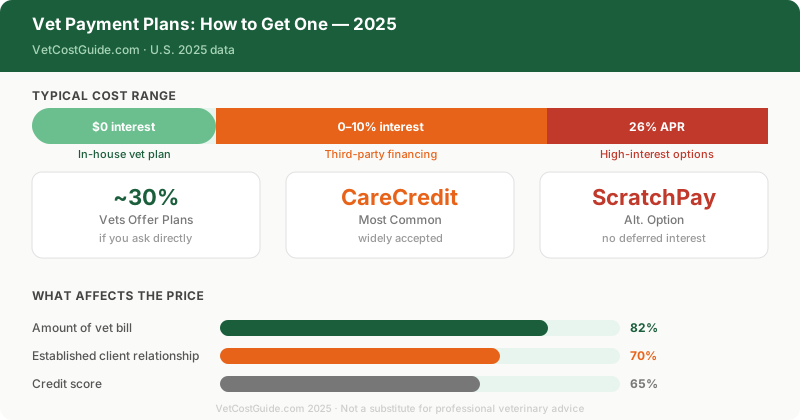
Here’s the uncomfortable truth about veterinary payment plans: they exist at far more clinics than most people realize, but they’re almost never advertised. Why? Because a practice that announces payment flexibility effectively invites every client to ask for it, which creates cash flow problems in a low-margin business. But that doesn’t mean the option doesn’t exist — it just means you have to ask for it directly, in the right way, at the right time. Vets went into medicine because they love animals. When a client is clearly committed to their pet’s care and honest about needing flexibility, most practices — particularly independently owned ones — would much rather work something out than turn the animal away or chase an unpaid invoice.
- Ask for a payment plan before the appointment, not after — it signals you’re proactive and trustworthy, not desperate
- Get the agreement in writing: amount, due dates, and what happens if you miss a payment
- Third-party options like ScratchPay and CareCredit are often how vets handle financing — don’t be surprised if they route you there
- Income-based programs like RedRover Relief can supplement a payment plan if the bill is still too large to manage
Payment Options Side by Side
| Option | Typical Terms | Interest | Credit Check | Best For |
|---|---|---|---|---|
| In-house vet payment plan | 2–6 months, 25–50% down | Usually 0% | Rarely | Established clients |
| CareCredit at vet office | 6–24 month promo | Deferred 32.99% | Yes (hard) | One-time large bills |
| ScratchPay | 3–24 months | 0%–29.99% | Soft check | Good–fair credit |
| RedRover Relief grant | Up to $200 assistance | None (grant) | None | Low-income + emergency |
| Payment plan + RedRover | Combined approach | Minimal | None | Large bills, low income |
Why the Policy Exists, and How to Work Around It
Veterinary clinics are small businesses. Unpaid invoices are a genuine operational problem — industry data suggests that veterinary practices write off millions in uncollected debt annually. Front desk staff are trained to collect at time of service, which is why the default answer often sounds like “we don’t do payment plans.” But there’s an important distinction: front desk receptionists usually don’t have authority to approve payment arrangements. The practice manager or veterinarian does.
If you hit a wall at the front desk, don’t give up. Ask to speak with the practice manager — that’s a reasonable and entirely normal request. The conversation changes significantly when you’re talking to someone with actual decision-making authority.
What to Do Before, During, and After
Before the Appointment
Call ahead and say it plainly: “I have an appointment on [date] for [pet name]. I’m anticipating the bill may be more than I can pay in full today — is there any flexibility on payment? I want to make sure we can proceed with the care.”
This approach works better than any in-the-moment conversation because it gives the practice time to think rather than putting them on the spot. It also signals that you’re organized and proactive, not desperate. Practices that are going to work with you will almost always say “let’s talk about it when you come in.” Practices that are strict about payment will tell you upfront, which is useful information too.
During the Appointment
When the estimate is presented: “I absolutely want to move forward with this care. Could I put [X amount] down today and pay the balance over [2–3 months]? I can do post-dated checks or set up automatic card payments — whatever works for the practice.”
The specificity matters. Vague requests (“can I pay later?”) rarely work. Concrete offers with a defined down payment, a realistic timeline, and a specific payment mechanism give the practice something to evaluate and say yes to.
After Approval
Always get the arrangement in writing. A proper payment agreement should include: total amount owed, the down payment, the amount and due date of each installment, accepted payment methods, and the policy if you miss a payment (grace period, late fee, effect on scheduled follow-ups). This protects both you and the practice and eliminates ambiguity that causes problems later.
Four Scripts That Work
Script 1 — Proactive pre-appointment call: “Hi, I’m calling about my appointment Thursday. I’m expecting the bill might be around $500–$800 and I can put $200 down today. Could I speak with someone about spreading the rest over 60 days? I’m happy to sign an agreement and set up autopay.”
Script 2 — At the counter, when handed an estimate: “I want to take care of [pet’s name] today. I can pay $150 right now and $100 per week until it’s paid off. Can we put that in writing? I’d like to start treatment today.”
Script 3 — When the first answer is no: “I completely understand. Could I speak with the practice manager? I’ve been a client here for [X years] and I’ve never had a payment issue — I just need a little flexibility this month.”
Script 4 — Genuine financial crisis: “I’m in a really difficult situation. I can’t pay the full amount today, but I also can’t let [pet’s name] go without care. Is there any way we can figure this out together — whether that’s a payment plan, a financing application, or a referral to an assistance program? I’m open to any option.”
- Never agree to a payment plan you can’t realistically keep — one missed payment can result in the full balance going to collections, damaging your credit and your relationship with the practice
- Don’t wait until checkout to bring up payment difficulty — by that point, care has been delivered and the practice has less incentive to negotiate
- Avoid asking for a payment plan for routine, plannable care (annual exams, scheduled vaccines) — save that goodwill capital for genuine financial emergencies
When the Bill Is Too Large for a Payment Plan Alone
For bills over $1,000, consider layering multiple resources:
RedRover Relief (redrover.org) processes emergency assistance grants of up to $200 within 1–2 business days, with payment sent directly to the clinic. It won’t cover the whole bill, but $200 reduces it meaningfully and shows the practice you’re actively seeking help.
The Pet Fund (thepetfund.com) targets chronic and serious illness situations — cancer, heart disease, orthopedic conditions. Grants average $200–$500. Applications take several weeks, so apply as early in the treatment process as possible.
Brown Dog Foundation (browndogfoundation.org) focuses specifically on life-threatening conditions in dogs. Grant amounts vary but can be significant for qualifying cases.
Local community foundations are an overlooked resource. Many cities have emergency funds for low-income pet owners administered through local United Way chapters or community foundations. Ask your local humane society or social services office whether they know of such programs in your area.
Three Real Examples
Maria, Minneapolis: Her Shih Tzu needed a $1,200 dental procedure. She called two days before the appointment, explained her situation, and offered 50% upfront. The practice manager set up three equal payments of $400 over 90 days with a signed agreement. All three payments completed without issue.
James, rural Georgia: His dog needed $800 in medication and treatment. His vet of 8 years verbally agreed to four monthly payments of $200, tied to monthly follow-up visits. The long-standing relationship made the arrangement easy — the vet mentioned he’d done the same for other long-term clients.
Nina, Los Angeles: The emergency hospital she visited didn’t offer in-house payment plans. They enrolled her in ScratchPay on the spot — soft credit check, approved in minutes — and she got a 6-month true 0% plan for a $1,900 bill. She paid $316 per month and owed nothing in interest.
Frequently Asked Questions
What if my vet says their policy prohibits payment plans? Individual staff may enforce a strict cash-up-front policy, but practice managers and veterinarians often have override authority for specific situations. Always ask to speak with a decision-maker. If they truly can’t help, ask whether they can refer you to any assistance programs before you leave.
Will asking for a payment plan change how my vet treats me as a client? At a reputable practice, no. A proactive, respectful conversation about payment actually demonstrates responsibility. It’s the clients who disappear without paying that cause problems. Most veterinarians have genuine empathy for people who are doing their best under financial strain.
What happens if I miss a payment? Policies vary. Some practices charge late fees ($15–$30 is common), some pause follow-up care until the account is current, and some send overdue accounts to collections after a defined period. The key is to communicate early — contact the practice before you miss a payment, explain the situation, and ask for a brief extension. Practices almost always accommodate clients who communicate proactively.
Can I use a payment plan for emergency care at a 24-hour hospital? Emergency hospitals tend to be stricter because of high operational costs, but most now partner with CareCredit, ScratchPay, or similar services to handle exactly this situation. Ask about financing options the moment you arrive — don’t wait until after treatment is complete.
Frequently Asked Questions
Payment plans themselves are usually free—vets don't charge interest or fees to set one up. However, the underlying veterinary service (emergency surgery, dental work, diagnostics) ranges from $500 to $5,000+ depending on the procedure. You're simply spreading that existing bill across 3–12 months instead of paying it all upfront.
Pet insurance covers the actual veterinary procedure, not the financing method—so whether you pay upfront or use a payment plan doesn't affect your reimbursement. Most plans reimburse 70–90% of eligible costs after your deductible ($250–$1,000), meaning you'll still owe 10–30% out-of-pocket, which a payment plan can help manage.
Ask immediately after receiving the estimate, before your pet's procedure is scheduled—this gives the vet practice time to approve terms and set up the arrangement. Most vets will discuss payment plans in the same conversation where they quote you the cost, especially if you mention upfront that you need to spread payments over time.