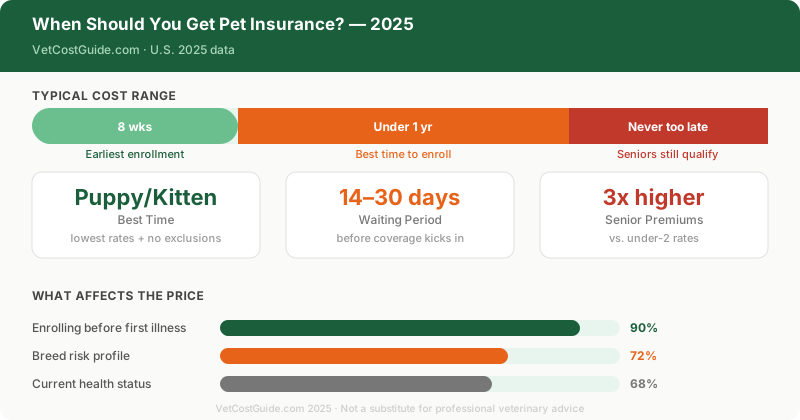
The optimal moment to buy pet insurance has already passed for a lot of people reading this. If your dog has had even one wellness visit, you’ve got medical records that insurers will comb through. That’s not a disaster, but it does mean you’re buying coverage with a partial exclusion list rather than a clean slate.
If you haven’t brought your pet to the vet yet? You’re in the best position you’ll ever be. Enroll today.
Timing is the most controllable variable in the pet insurance value equation, and most people get it wrong in the same direction: they wait. They figure they’ll get around to it. They assume their young, healthy dog doesn’t need it yet. Then something gets documented in the chart, and suddenly a condition they thought would be covered is permanently excluded.
- Enroll at 8 weeks (the earliest most insurers accept) or as soon as possible after adoption to avoid pre-existing exclusion risk.
- Premium costs increase substantially with age: a dog insured at age 1 pays 40–60% less per month than the same dog enrolled at age 5.
- All plans have waiting periods—14 days for illness, up to 6–12 months for orthopedic conditions—so enrolling now means coverage starts sooner.
- The 5-year math model consistently shows that early enrollment saves $3,000–$8,000 in combined premium and out-of-pocket costs vs. waiting until age 3–4.
What Waiting Costs You: Premium Data by Age
These numbers are based on a mid-size mixed breed dog (30 lbs) in Columbus, Ohio, with a $250 annual deductible and 80% reimbursement. Actual premiums vary by breed, ZIP code, and provider.
| Enrollment Age | Monthly Premium (Est.) | Annual Premium | 5-Year Total Cost (Premiums Only) |
|---|---|---|---|
| 8 weeks | $32–$42 | $384–$504 | $1,920–$2,520 |
| 1 year | $36–$48 | $432–$576 | $2,160–$2,880 |
| 3 years | $48–$65 | $576–$780 | $2,880–$3,900 |
| 5 years | $58–$85 | $696–$1,020 | $3,480–$5,100 |
| 7 years | $85–$130 | $1,020–$1,560 | $5,100–$7,800 |
| 10 years | $140–$220 | $1,680–$2,640 | $8,400–$13,200 |
The gap between enrolling at 8 weeks vs. age 5 is $1,500–$2,500 in premiums alone over the first five years. And that’s before you account for the pre-existing conditions that may have accumulated by age 5, each of which represents a future claim that insurance simply won’t cover.
Understanding Waiting Periods
Every pet insurance plan in the US imposes waiting periods between enrollment and when coverage actually begins. These aren’t negotiable—they can’t be waived except through specific employer benefits programs or, in some cases, a vet’s wellness certification.
Standard waiting periods:
- Accidents: 14 days
- Illness: 14–30 days
- Orthopedic conditions: 6–12 months (most plans); 14 days at ASPCA for accident-related orthopedic injuries
Enrolling today means accident coverage kicks in within two weeks, illness coverage in two to four weeks, and orthopedic coverage in six to twelve months. A puppy enrolled at 8 weeks will have full orthopedic coverage by 8–10 months of age—before the period when ACL tears typically become a meaningful risk in active, growing dogs.
A dog enrolled at age 3 faces the same waiting periods. The difference is that the risk of needing that orthopedic coverage is already higher, and the window between enrollment and the waiting period clearing is a window of real exposure.
The 5-Year Math Model
Two identical dogs. Dog A enrolled at 8 weeks. Dog B enrolled at age 3. Same breed, same health history through age 5, except for one cruciate ligament tear at age 4 that costs $5,500 to repair.
| Factor | Dog A (Enrolled Age 8 Wks) | Dog B (Enrolled Age 3) |
|---|---|---|
| Premiums paid by age 5 | $2,400 | $1,440 |
| Cruciate repair covered? | Yes (orthopedic waiting period met) | Yes (waiting period met after 6 mos) |
| Reimbursement on $5,500 surgery | $4,200 | $4,200 |
| Other claims (allergy, ear infection) | $600 reimbursed | $600 reimbursed |
| Net financial benefit (claims – premiums) | +$2,400 | +$3,360 |
| Pre-existing conditions at enrollment | None | Possible (3 years of records) |
Dog B looks like it comes out slightly ahead on net financial benefit—$960 less in premiums paid. But that math assumes Dog B has three clean years of vet records. If even one ear infection, allergy note, or limping concern got documented during that time, the financial gap reverses. One excluded condition can cost more than the $960 in premium savings in a single claim.
Breed Timing Considerations
Some breeds make early enrollment especially urgent because their medical cost profiles are front-loaded:
French Bulldogs — Near-certain treatment for brachycephalic syndrome, skin fold dermatitis, or spinal issues. Average annual vet spend $1,200–$3,500. Enroll before the first vet visit, no exceptions.
Golden Retrievers — Approximately 60% develop cancer in their lifetime. Cancer treatment at specialty clinics runs $5,000–$30,000. Enroll before age 2 to keep premiums manageable before cancer risk peaks.
German Shepherds — Prone to hip dysplasia, degenerative myelopathy, and bloat. Both orthopedic surgery and degenerative myelopathy treatment can exceed $5,000. Early enrollment captures the orthopedic waiting period before typical symptom onset.
Labrador Retrievers — High rates of obesity-related joint disease, cruciate tears, and ear infections. Multiple conditions in a single year benefit from an annual deductible structure, which reinforces the case for enrolling before any of these conditions are documented.
- Waiting until your puppy’s first vet visit and then enrolling—that first visit creates a medical record that insurers will scrutinize at claim time.
- Assuming you can “always get insurance later”—premiums rise substantially every year, and conditions diagnosed even once may be permanently excluded.
- Enrolling right before a suspected problem to try to get coverage—insurers look for this and will apply waiting periods or deny claims for conditions with prior symptoms.
- Skipping enrollment for “healthy young dogs”—the orthopedic waiting period means you need to enroll before problems appear, not when they do.
The Enrollment Process
It takes about 20 minutes. Don’t let it drag on.
Compare quotes before the first vet visit. Use a quote aggregator (PetInsuranceReview.com, Pawlicy Advisor) to compare 5–6 plans simultaneously with your pet’s breed and ZIP code.
Choose a comprehensive plan. Accident-only plans are significantly cheaper but provide almost no value for breed-typical or age-related conditions. A comprehensive plan is almost always the right choice.
Select your deductible and reimbursement rate. $250 annual deductible, 80% reimbursement is the most common and cost-effective balance. High-risk breeds should consider 90% reimbursement.
Enroll and start the waiting period clock. Most plans allow same-day online enrollment. Coverage begins 14 days after your start date for accidents and illness.
Schedule the first vet visit after the waiting period. If possible, delay the first wellness exam until after the accident/illness waiting period to avoid records being created before coverage begins.
FAQ
Can I get pet insurance for a cat at 8 weeks too? Yes. Most insurers accept cats and dogs at 8 weeks. The same early-enrollment logic applies—feline asthma, IBD, hyperthyroidism, and dental disease are all conditions that benefit from pre-documentation enrollment.
Is there an upper age limit for enrollment? Most plans cap new enrollments at 14 years. ASPCA, Embrace, Nationwide, and Hartville do not have upper age limits for new enrollees. However, premiums for senior pets can make coverage cost-ineffective depending on the dog’s health history.
What if I adopt an adult dog with unknown medical history? Enroll immediately after adoption. Most insurers will conduct a records review or require a wellness exam within 14 days. Unknown prior history actually works in your favor—no documented conditions means fewer automatic exclusions.
Does getting a wellness exam before enrolling affect my coverage? Yes. A wellness exam creates a medical record. Any conditions noted—even minor ones like “mild ear debris” or “slightly overweight”—become part of the reviewable history. Ideally, enroll before the first exam, then schedule the wellness visit.
Frequently Asked Questions
Pet insurance premiums typically range from $15 to $50 per month for dogs and $10 to $40 per month for cats, depending on the pet's age, breed, and coverage level you select. Kittens and puppies under one year cost less (often $10-25/month), while senior pets over 7 years old can jump to $60-100+ monthly. The exact price also varies by your state and deductible choice, with higher deductibles lowering your monthly premium.
No—pre-existing conditions are almost universally excluded by all pet insurance companies, even if they are cured or in remission. This is why buying insurance before your pet's first vet visit is critical; any condition noted in medical records becomes excluded forever. If your pet already has vet records showing illness, injury, or symptoms, you'll be purchasing a policy with a partial exclusion list rather than clean coverage.
The best time is before your pet's first veterinary visit, ideally within the first few weeks of bringing them home. If you've already had a wellness exam or vet visit, you should still enroll immediately to prevent any newly discovered conditions from becoming excluded. Waiting increases your premium costs as pets age (rates can rise 10-20% annually after age 7) and eliminates your ability to get coverage for any health issues your vet identifies.